InsightsGoogle Ads
Google Ads for Healthcare & Medical Practices: The 2026 Guide
Google's health-policy constraints, Ahpra's advertising rules, and the patient-acquisition strategy that works inside them — intent capture, specialty economics and privacy-safe measurement.
22 July 2026Updated 28 September 20266 min readEdited by Michael Wilkins
Direct answer
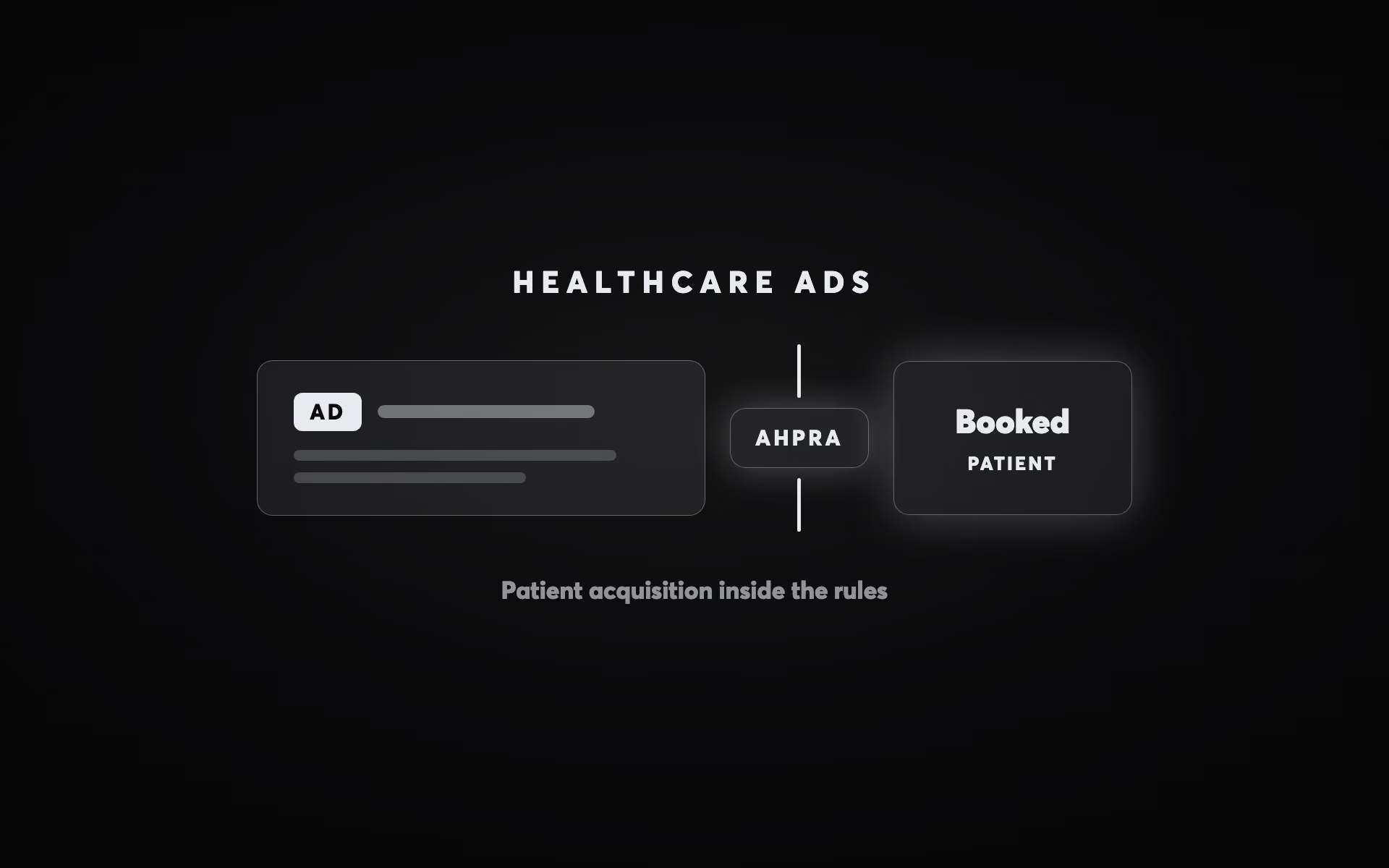
Healthcare Google Ads is defined by its constraints. Google treats personal health as a sensitive category, so ads about health conditions, treatments for chronic conditions or invasive procedures can't use remarketing lists, Customer Match or lookalike audiences. In Australia, the National Law bans testimonials about the clinical aspects of care in health-service advertising, along with any claim that creates an unreasonable expectation of beneficial treatment; New Zealand has its own advertising code, and its Medical Council bars doctors from using testimonials. What works inside those rules is disciplined search-intent capture: service-plus-suburb campaigns, plain factual creative (services, credentials, process, and practical details such as who you bulk bill), per-service-line economics, and measurement built on booked appointments with health details kept out of URLs and analytics.
Healthcare is the category where competent advertisers get ads disapproved, remarketing plans turn out to be against policy, and copy that would be unremarkable anywhere else breaches professional advertising rules. It is easy to learn these constraints by hitting them. The practices that win with Google Ads are the ones that treat the rules as the starting point and build patient acquisition inside them.
This guide covers the constraint layer first — Google's health policies plus the professional advertising rules that apply in Australia and New Zealand — then the strategy that works inside it: intent capture, locality structure, specialty economics and privacy-safe measurement. How the same platform works for law firms and home services is covered separately.
The rules first: what shapes every healthcare campaign
Google's side. Google treats personal health as a sensitive interest category. Under its policy on health in personalised advertising, ads about physical or mental health conditions, treatments for chronic conditions, intimate health issues, disabilities or invasive procedures (cosmetic surgery and injections included) can't use your own remarketing lists, Customer Match or lookalike segments. In practice that removes standard remarketing from the toolkit for condition and treatment campaigns — you cannot build an audience from visitors to a treatment page and follow them around the web. Google's healthcare and medicines policy adds restrictions of its own: prescription-drug terms are restricted in ads, landing pages and keywords; online pharmacies and telehealth prescribing services need certification, and in Australia even certified ones can't use prescription-drug terms in the ad or on the page it links to; and in both Australia and New Zealand, only government entities can advertise recovery-oriented drug and alcohol addiction services. Campaigns need to be designed for this from day one, not patched after the disapprovals arrive.
The professional side in Australia. Anyone advertising a regulated health service, practitioner or not, is bound by section 133 of the National Law, which Ahpra's advertising guidelines (in effect since 14 December 2020) explain. Advertising must not be false or misleading, offer a gift or discount without stating its terms, use testimonials, create an unreasonable expectation of beneficial treatment, or encourage unnecessary use of health services. A testimonial here is a positive statement about the clinical aspects of care — the symptom, the diagnosis or treatment, or the outcome; comments about customer service or communication style don't count. The guidelines also flag claims of a superior service, words like "safe" or "pain-free" used without acknowledging risk, and specialist titles used without specialist registration. If an ad for your service also promotes therapeutic goods, the TGA's rules apply too: prescription-only medicines can't be advertised to the public (weight-loss injections and medicinal cannabis are the TGA's own examples), and other goods must meet the Therapeutic Goods Advertising Code.
The professional side in New Zealand. Health advertising must meet the Advertising Standards Authority's Therapeutic and Health Advertising Code, whose updated version has applied to all advertising since 1 July 2026. It requires claims to be substantiated before they are made, and allows patient testimonials only where the law doesn't prohibit them, and only if they are authenticated, genuine, current and typical. Registered practitioners also answer to their own regulator, and for doctors that is stricter: the Medical Council's statement on advertising says testimonials must not be used in your advertising or quoted on any platform you control, and that you shouldn't encourage patients to post testimonials on third-party websites either.
This is a summary, not legal advice. The safe operating principle for both countries: every ad and landing-page claim gets checked against the rules that govern your profession, and specificity about services, credentials and process replaces persuasion tricks that other industries can get away with.
None of this makes the channel weak. It narrows the game to the part that was always strongest anyway: being found by people actively looking for care you provide.
What works: capture intent, don't chase audiences
With your own audience lists off the table for condition and treatment campaigns, healthcare Google Ads is a search-intent game, and the intent is rich. Patients search symptoms, treatments, practitioners and logistics — "physio near me", "dental implants cost", "skin check [suburb]", "same day GP appointment". Structure follows three query families:
Service + location queries are the core: high intent, clear match to a service page, suburb-level relevance. Treatment-research queries ("how does X work", "X vs Y") suit education content and gentle conversion paths rather than hard booking CTAs. Logistics queries — hours, availability, whether you bulk bill, parking, referrals — are worth answering plainly in your ads and on your pages. Where you bulk bill, say exactly who qualifies: Ahpra's guidelines flag price information that is unclear, inexact or vague.
Specialty economics: the same platform, very different maths
Acquisition economics vary widely inside healthcare. High-value dental work, orthodontics and specialist procedures support meaningful acquisition costs per new patient, and long patient relationships change lifetime value entirely. High-volume allied health and general practice operate on thinner per-visit economics where recurring care and capacity utilisation drive the value of a new patient. Referral-pathway specialists face a subtler funnel again: patients research before and after seeing a GP, so search visibility shapes which name is in the room when the referral conversation happens.
Run the same arithmetic as any lead-gen category — value of a new patient, enquiry-to-booking rate, allowable cost per enquiry — but run it per service line, and let it decide where paid search concentrates. Usually a few service lines have strong economics, and a long tail is better left to organic presence.
Creative within the rules
When we ran lead generation for Nuance's Dragon speech-recognition software, across search, display, LinkedIn, Facebook and email, the healthcare creative highlighted hands-free use during surgery or patient interaction. The same approach suits practice marketing: be specific rather than superlative; in healthcare it is also what keeps you compliant. Name the service precisely, the location, the practitioner credentials you genuinely hold, the process a new patient can expect, and the practical facts that reduce friction. Skip the outcome adjectives entirely — "leading", "best" and "pain-free" are the kind of claims Ahpra's guidelines flag, and a plain sentence about what happens at the first appointment tells a new patient more.
Measurement without remarketing
Losing remarketing does not mean losing measurement — it means building it privacy-first.
Count real bookings. Calls with a minimum duration, and conversions wired to your online booking flow, are the two signals worth optimising toward. Raw form fills overcount.
Keep health details out of your data exhaust. Do not pass condition or treatment terms through URLs into analytics, keep form data minimal, and run proper consent management. Privacy care in healthcare is not just regulatory hygiene — patients notice.
Read performance at the service-line level. Without audience-based retargeting, your optimisation loop is search-term discipline, ad relevance and landing-page conversion rate per service line. It is a simpler loop, and it works.
Structure for clinics and multi-practitioner practices
Multi-location clinics should run location-scoped campaigns with suburb-true ad copy and landing pages per clinic, not one blended campaign pointing at a locations page. Practitioner names matter in healthcare search — patients often search for a practitioner they have been recommended — so protect and capture practitioner-brand queries. And keep your Google Business Profile complete and accurate: Google says complete information, and more reviews and positive ratings, can help your local ranking, and those local results sit beside your ads.
Reviews need care. In Australia, patients posting reviews isn't a breach, and you aren't responsible for removing reviews on platforms you don't control. The line is using them: quoting reviews about clinical care in your ads, on your website or on social media you control is advertising with testimonials, and Ahpra cautions that even engaging with reviews on a third-party site may count. In New Zealand, doctors shouldn't encourage patients to post testimonials anywhere, including third-party review sites.
Your first 90 days
Days 1–30: compliance review of all planned claims; one campaign for your strongest service line on exact and phrase match; suburb-presence targeting; call tracking and booking-flow conversions live; negative keywords for jobs, courses, free-service and public-system queries that your practice does not serve.
Days 31–60: weekly search-term pruning; add the second service line; build one education page for the research-stage queries worth owning; verify no health terms leak through your measurement stack.
Days 61–90: read cost per booked appointment per service line, concentrate budget where the economics are strongest, and expand location structure if you run multiple clinics.
If you want this built by a team that starts from the rules rather than discovering them mid-campaign, that is our paid search practice — or begin with a conversation with our strategist.
Questions