InsightsGoogle Ads
Google Ads for Law Firms: The 2026 Strategy Guide
Practice-area economics, urgent vs considered intent, the compliance layer and intake discipline — how law firms make legal clicks profitable, including the most expensive ones.
22 July 2026Updated 28 September 20267 min readEdited by Michael Wilkins
Direct answer
Google Ads works for law firms when campaigns are planned per practice area against real matter economics — not run as one blended firm campaign. The essentials: price the matter, not the click; separate urgent-defensive intent (call-first, availability-led) from considered-transactional work (fee clarity, comparison-tolerant); build the negative-keyword list before launch, because legal search terms fill with expensive irrelevance; keep every claim inside your jurisdiction's advertising rules, which in Queensland restrict personal injury advertising to little more than your name, contact details and practice areas; and measure signed matters, not raw enquiries. Intake speed is half the campaign — an unanswered urgent call is a paid referral to a competitor.
Legal clicks can be some of the most expensive a local business buys, and firms routinely conclude from a badly structured trial that "Google Ads doesn't work for law". What usually doesn't work is pricing every practice area against the same click cost, sending urgent and considered intent to the same landing page, and counting enquiries instead of signed matters.
This guide covers the strategy layer that legal campaigns need: practice-area economics, an intent taxonomy that maps to how people actually engage lawyers, the compliance layer that makes legal advertising different, and the intake discipline that decides whether paid enquiries become clients. How the same platform behaves for home services and healthcare is covered separately.
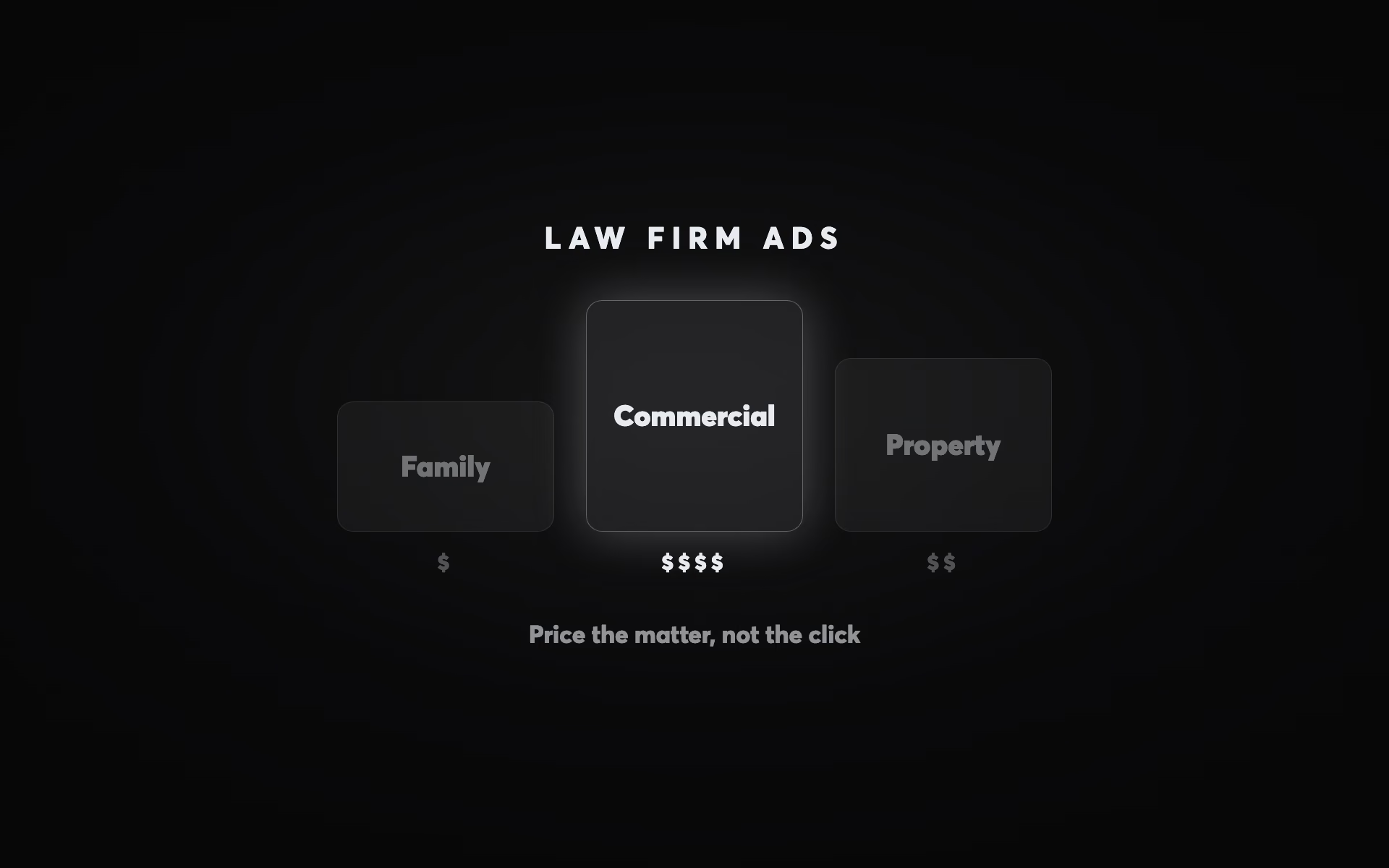
Price the matter, not the click
The only way an expensive click makes sense is against the value of the matter it can produce. That calculation is different for every practice area, which is why practice areas — not the firm — are the unit of campaign planning.
Click prices differ by practice area too. In Google Keyword Planner for Australia (checked September 2026), the high end of the top-of-page bid range for "compensation lawyer" was about two and a half times that for "plumber", and for "personal injury lawyer" about twice, while "family lawyer" and "conveyancing" came in below "plumber". In New Zealand the spread was narrower: "employment lawyer" was the highest of the legal terms checked, at about one and a half times "plumber", and "personal injury lawyer" was roughly level with it.
Work the arithmetic per area, with your own numbers: average matter value, enquiry-to-client conversion rate, and therefore the most you can pay per enquiry while staying profitable. A fixed-fee conveyancing file and a commercial litigation retainer might both arrive from a search, but they support completely different acquisition costs, match types and levels of bidding aggression. Firms that run one blended campaign tend to overpay for their low-value work and under-bid on their high-value work at the same time.
This also sets an honest floor: some practice areas in some cities do not support cold search economics at all, and knowing that before you spend is a win, not a failure.
An intent taxonomy for legal search
Legal queries arrive in three distinct modes, and each needs its own campaign treatment.
Urgent-defensive. Arrest, police interview, intervention or protection order, sudden employment termination, urgent family matters. These searchers need to speak to someone now. Ads with call assets scheduled to the hours someone answers, after-hours coverage if you genuinely provide it, and landing pages that lead with immediate availability. Urgency you cannot actually meet should not be promised — the first phone call is the proof.
Considered-transactional. Conveyancing, wills and estates, business setup, employment agreements. Comparison behaviour is normal, fee sensitivity is high, and clear scope-and-fee communication (where your rules permit publishing fees) is a strong differentiator in the ad and on the page.
Research. "What am I entitled to", "how does X work" queries. Mostly poor targets for direct-response bidding, but strong territory for content that builds authority and captures the small share ready to engage. Do not let broad match quietly drag your urgent-intent budget into research queries — this is where negative keywords earn their keep.
The compliance layer
Legal advertising carries rules that generic Google Ads playbooks simply ignore, and they vary by jurisdiction. What follows is a summary, not legal advice.
Australia. Every state and territory now applies solicitors' conduct rules based on the Australian Solicitors' Conduct Rules; the Northern Territory was the last to adopt them, from 1 September 2025. Under rule 36, advertising must not be false, misleading or deceptive, offensive or prohibited by law, and a solicitor must not advertise as an "accredited specialist" (or use post-nominals derived from it) unless accredited by the relevant professional association. Comparative and outcome claims that would be routine in other industries can easily become misleading-conduct problems in legal.
Personal injury work is where the states differ. In Queensland, section 66 of the Personal Injuries Proceedings Act 2002 limits personal injury advertising to the name and contact details of the practitioner or firm and its areas of practice, published only by the methods the Act allows, and gives "no win, no fee" advertising as an example of a breach; your own website may also explain the law of negligence, a person's rights under it and the terms on which you act. Get advice before running search ads for personal injury work there. New South Wales, by contrast, no longer has a personal injury advertising ban: the Law Society of NSW notes that the Uniform Law did not carry over the prohibition in the repealed Legal Profession Regulation 2005, though rule 36 still applies. Check the position in your own state or territory.
New Zealand. The Lawyers and Conveyancers Act (Lawyers: Conduct and Client Care) Rules 2008 prohibit conduct that is misleading or deceptive, or likely to mislead or deceive, on any aspect of a lawyer's practice (rule 10.9), and contacting prospective clients in a way that is intrusive, offensive or inappropriate, or when they are in no state to exercise reasonable judgement about engaging a lawyer (rule 10.10).
Google's own layer. Its personalised advertising policy treats criminal matters, relationship hardships and financial distress as sensitive categories, naming criminal defence lawyers, divorce services and bankruptcy services among its examples, so ads for that work can't use remarketing lists, Customer Match or lookalike segments.
None of this is a reason to avoid advertising; all of it is a reason to have every claim in ads and landing pages reviewed against your jurisdiction's rules before launch, and to prefer verifiable specifics — practice focus, process, availability, credentials you genuinely hold — over superlatives. This is exactly why legal campaigns reward specialist handling rather than a generic setup.
Negative keywords do the heavy lifting
A legal account's search-terms report fills with expensive irrelevance quickly: free legal advice, legal aid, community law centre, law jobs, paralegal courses, template and DIY document hunters, and research phrasings with no engagement intent. Build the negative list before launch, then prune weekly from real search terms. Every excluded junk query is budget returned to the searches that can become matters — where clicks cost this much, negative-keyword discipline can be the difference between profit and loss on its own.
Intake is half the campaign
The fastest way to waste a legal marketing budget is to win the click and lose the phone call. Speed-to-answer decides outcomes: an urgent-intent caller who reaches voicemail simply calls the next firm, and your click paid for their enquiry. Measure answer rates in business hours, decide honestly what happens after hours, and make the first conversation easy to book for considered work.
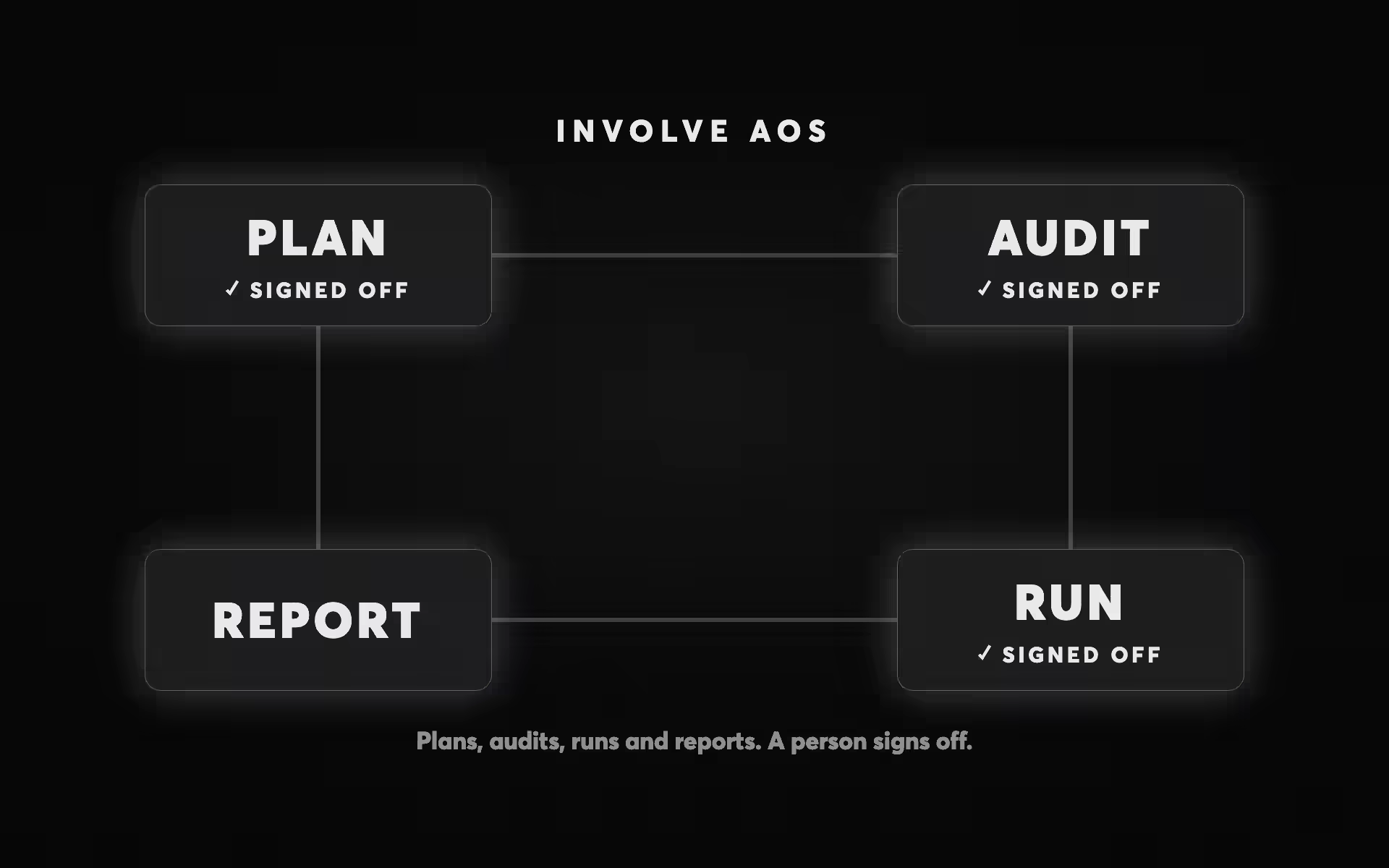
Then track the pipeline all the way through: enquiry → consultation → signed matter, attributed back to campaign and keyword. Optimising toward raw enquiries rewards the campaigns that produce the most phone calls; optimising toward signed matters rewards the campaigns that produce clients. They are often not the same campaigns. (Before recording intake calls for quality review, check the rules that apply to you: in Australia, Commonwealth and state or territory laws both cover recording phone calls, and in New Zealand, rule 10.13 of the lawyers' conduct rules requires you to tell a person before you record them.)
What selling to legal professionals taught us
Our own legal-vertical work sat on the other side of the desk. For Nuance, the speech-recognition company behind Dragon, we ran a multi-year, global lead-generation programme across search, display, LinkedIn, Facebook and email, with a separate funnel and message for each vertical. Campaigns for Dragon for Legal Professionals delivered 341 leads at a cost per lead of A$14.66, from 5,983 clicks at A$0.83 each, and the legal-sector ads focused on compliance, speed and document accuracy. The audience was legal professionals rather than people needing a lawyer, but the principle transfers: speak to the specific problem. For a firm, that means practice-area-specific ads and pages rather than "full service law firm" messaging — the searcher with an employment problem wants employment-law specifics, not breadth.
Landing pages that earn the enquiry
Send each campaign to a matter-scoped page, never the homepage. The page should answer, in order: do you handle exactly this problem, in my location; what happens when I contact you; what will it cost or how is cost handled; and why should I trust you with it — credentials, experience and process, kept within your advertising rules. A single clear next step (call, or book a first conversation) is easier to act on than a page of options. For urgent-intent campaigns, the phone number is the hero of the page, not a footer detail.
Your first 90 days
Days 1–30: pick the one or two practice areas whose economics best support search, build one campaign per area on exact and phrase match, launch with the full negative list, matter-scoped landing pages and call tracking, and have claims compliance-checked before spend.
Days 31–60: prune search terms weekly, split urgent from considered intent where both exist in an area, and start recording consultation and signed-matter outcomes against source campaigns.
Days 61–90: re-price bids from real cost-per-signed-matter data, scale the areas that produce clients profitably, and cut or restructure the ones that do not.
If you would rather have this built by people who already know the category's rules and economics, talk to us about paid search — or start the conversation with our strategist.
Questions