InsightsLead Generation
B2B Lead Generation Agencies in Australia and New Zealand: Pricing Models, What You Should Get, and Red Flags
How B2B lead generation agencies in Australia and New Zealand charge, what a good engagement includes, red flags, the spam rules, and four results from our case studies.
29 October 20264 min readEdited by Michael Wilkins
Direct answer
A B2B lead generation agency finds and converts business buyers into sales conversations, using channels such as paid search, LinkedIn, paid social, email and content. In Australia and New Zealand most agencies charge a monthly retainer, a price per lead, or a mix of the two, with media spend paid separately. A good engagement starts by agreeing in writing what counts as a qualified lead, connects every lead to your CRM, and reports on qualified leads and sales rather than raw volume. Be wary of pay-per-lead pricing: it pays the agency for volume, so it rewards the cheapest leads rather than the ones that become revenue. Watch too for guaranteed lead counts with no definition of quality, purchased contact lists, and ad accounts the agency owns instead of you. Email and SMS campaigns must also follow Australia's Spam Act 2003 or New Zealand's Unsolicited Electronic Messages Act 2007.
What a B2B lead generation agency actually does
B2B buyers rarely convert on the first visit. They research, compare and involve colleagues before they talk to sales. A lead generation agency builds the path from first touch to sales conversation: who to reach, on which channels, with what offer, and how each lead is qualified and passed to your team.
The channels vary by market. Paid search captures people already looking. LinkedIn and paid social reach buyers by role and industry. Content such as guides and webinars earns contact details. Email and remarketing bring prospects back.
How agencies charge
| Model | How it works | Good for | Watch for |
|---|---|---|---|
| Monthly retainer | A fixed fee for strategy, campaign management and reporting. Media spend is paid separately. | Ongoing programmes across several channels | A retainer with no agreed result to judge it against |
| Pay per lead | A set price for each lead delivered. | Rarely the buyer. The agency is paid for volume. | Cheap leads that look good in a report and seldom close |
| Hybrid | A lower retainer plus a fee or bonus tied to qualified leads or sales. | Sharing risk once a baseline exists | Targets set before anyone has measured the baseline |
Why pay per lead works against you
Pay per lead sounds like the agency is sharing your risk. In practice it pays the agency for the cheapest thing it can produce. Every channel can generate low-cost form fills: students, competitors, job seekers and businesses too small to buy. An agency paid per lead has every reason to find more of them, and little reason to find the harder, more expensive buyer who signs.
The cost per lead looks good. The cost per customer does not. That is why we never price per lead. We agree what a qualified lead is before launch, charge for the work, and judge the result on qualified leads and the revenue they produce.
Whatever the model, ask what the media budget is, who pays it, and whether the agency adds a margin to it.
What a good engagement includes
- A written definition of a qualified lead. Company size, role, need and timing, agreed with your sales team before launch.
- Tracking into your CRM. Every lead carries its source, so you can see which channel produces customers, not just form fills.
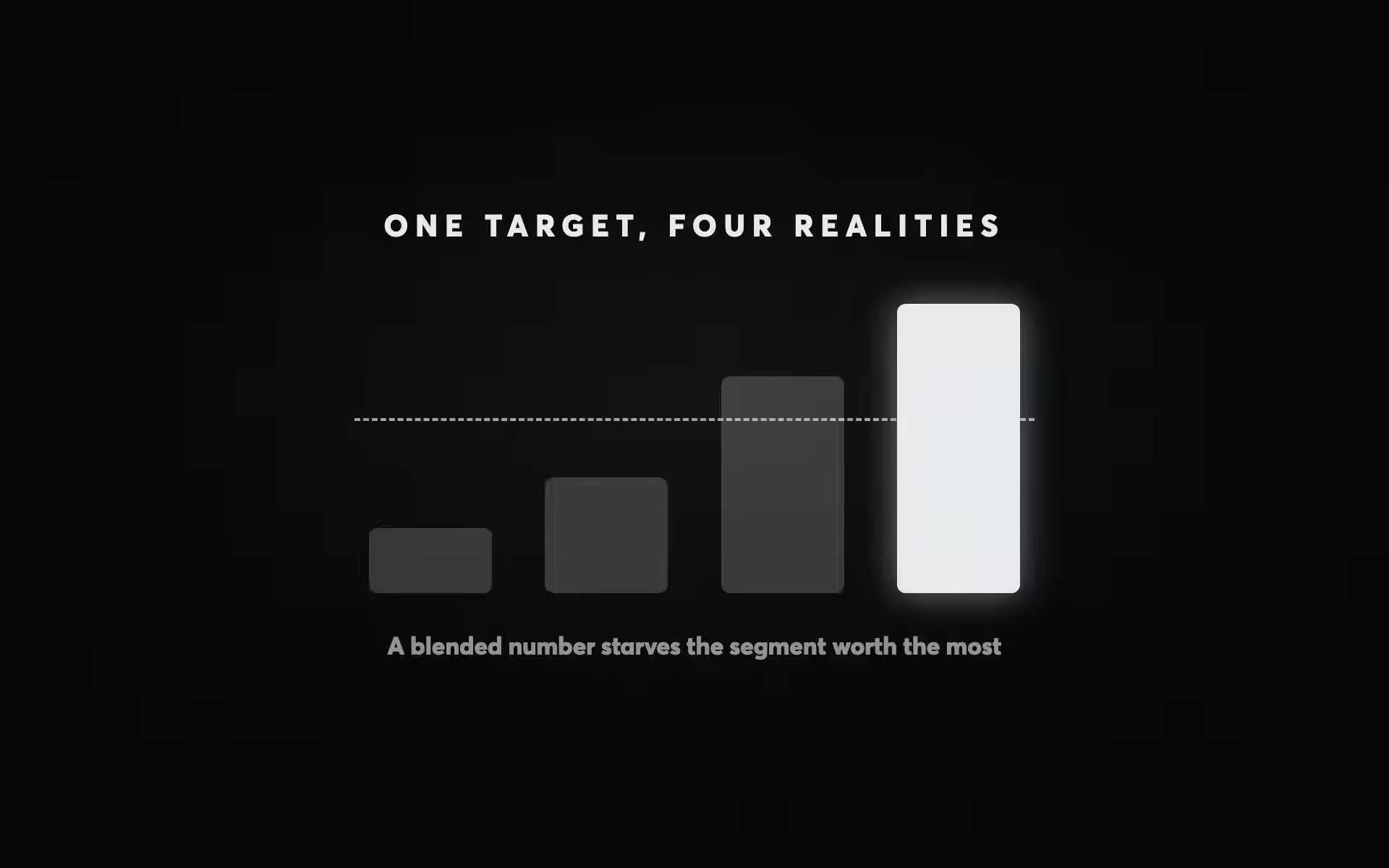
- Segmentation by buyer. Different industries and roles cost different amounts to reach and are worth different amounts. One blended target hides that.
- Reporting on qualified leads and sales. Volume is the cheap number. Qualified leads and closed deals are the business.
- Your accounts, your data. Ad accounts, analytics and lists stay in your name.
- A plan for sales capacity. Leads that nobody calls go cold.
What the results look like
Segmenting matters because lead costs vary widely. In a multi-year programme for Nuance across search, display, LinkedIn, Facebook and email, cost per lead was A$14.66 for legal professionals and A$82.14 for finance professionals.
For Clinic to Cloud, practice-management software for specialists and GPs, a Google Ads and Facebook programme cut blended cost per lead from A$227.27 to A$96.15 in four months, on a 17% budget increase. Across eleven tracked months it delivered 1,067 leads, and the retainer renewed for 18 consecutive months.
For Tudor Insurance in Melbourne, a four-channel system of paid search, cold email, LinkedIn InMail and display remarketing produced 107 leads and 47 new clients in the first month.
Volume brings its own problem. For JB Markets, cost per lead fell to A$20, 60% below the A$50 target, and the campaign then had to pause because the sales team could not handle the volume. Plan capacity before you scale.
Red flags
- Pay-per-lead pricing, which pays for volume rather than customers.
- Guaranteed lead numbers with no definition of what a lead is.
- Purchased contact lists or email to addresses with no consent.
- Ad accounts in the agency's name, which you lose when you leave.
- Reports full of clicks and impressions but no qualified leads or sales.
- Long lock-in contracts before any baseline has been measured.
The rules for email and SMS
Cold email and SMS are regulated in both countries. In Australia, the Spam Act 2003 requires consent, clear sender identification and a working unsubscribe that is actioned within five working days. Publishing an email address does not by itself give consent; a narrow exception applies to conspicuously published business addresses where the message relates to the person's role. In New Zealand, the Unsolicited Electronic Messages Act 2007 sets the same three steps: consent, identify and unsubscribe. Deemed consent can apply to an address published in a business capacity, with no statement refusing marketing, where the message is relevant to the person's role. In both countries the sender must be able to prove consent. Get advice for your own campaigns.
How to choose
Ask each agency to define a qualified lead for your business, show how leads reach your CRM, explain the fee and the media budget separately, and show results credited to the channels that produced them. The answers tell you more than the pitch deck.
How we run B2B lead generation: lead generation at Involve Digital, with dedicated pages for New Zealand and Sydney.
Questions