InsightsPaid Media
Your SaaS Lead Costs Are Fine. Your Qualified Lead Costs Are Not.
A single blended cost-per-lead target starves the segment worth the most. What broad match buys in software, and the segmentation that fixed it on three audited engagements.
19 September 20264 min readReviewed by Michael Wilkins
Direct answer
Unqualified B2B SaaS leads from Google Ads are usually a segmentation problem, not a targeting one. Software categories are searched by students, competitors, job seekers and businesses far too small to buy, and broad match buys all of them at attractive prices. Cost per lead also varies enormously inside a single account: across one enterprise software programme spanning legal, finance, government and healthcare, Involve Digital delivered leads at US$14.66, US$26.17, US$57.53 and US$82.14 — a spread of roughly 5.6 times, driven entirely by vertical and offer difficulty. A single blended target would have overspent on the cheap segment and starved the valuable one. Segment by vertical and persona, optimise to the qualified demo rather than the form fill, and judge cost per qualified conversation.
The blended number hides everything that matters
Ask a SaaS marketing lead what their cost per lead is and you will usually get one number. That number is almost always an average of segments that have nothing to do with each other.
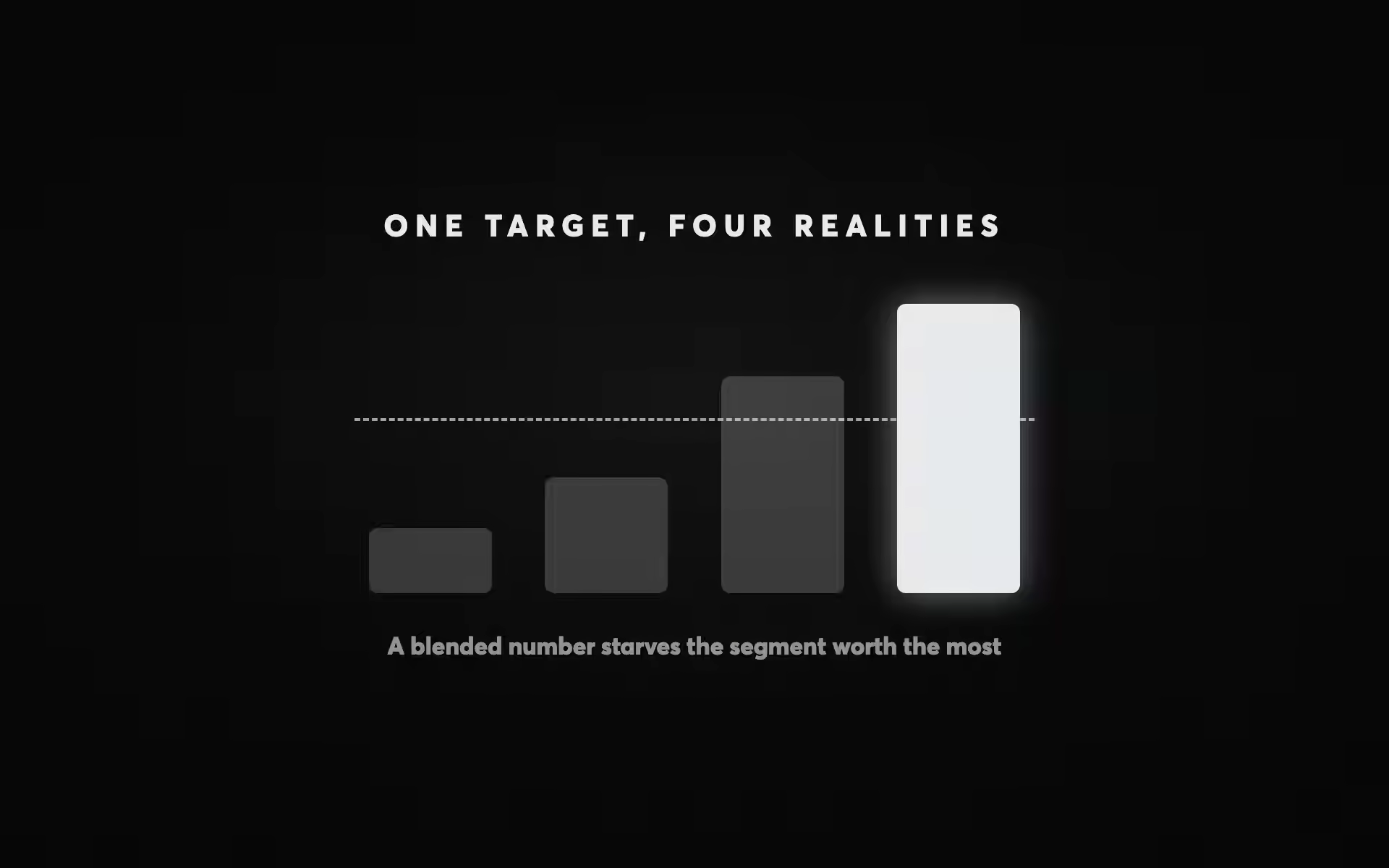
Running enterprise software lead generation for a global vendor across legal, finance, government, healthcare and law enforcement, we delivered cost per lead of US$14.66, US$26.17, US$57.53 and US$82.14 inside the same programme. A 5.6× spread, one client, one quarter.
A single blended target applied across that would have done two things at once: overspent on the cheapest vertical because it looked efficient, and switched off the most expensive one just as it started producing the enterprise deals that pay for everything.
What broad match does to a consultative sale
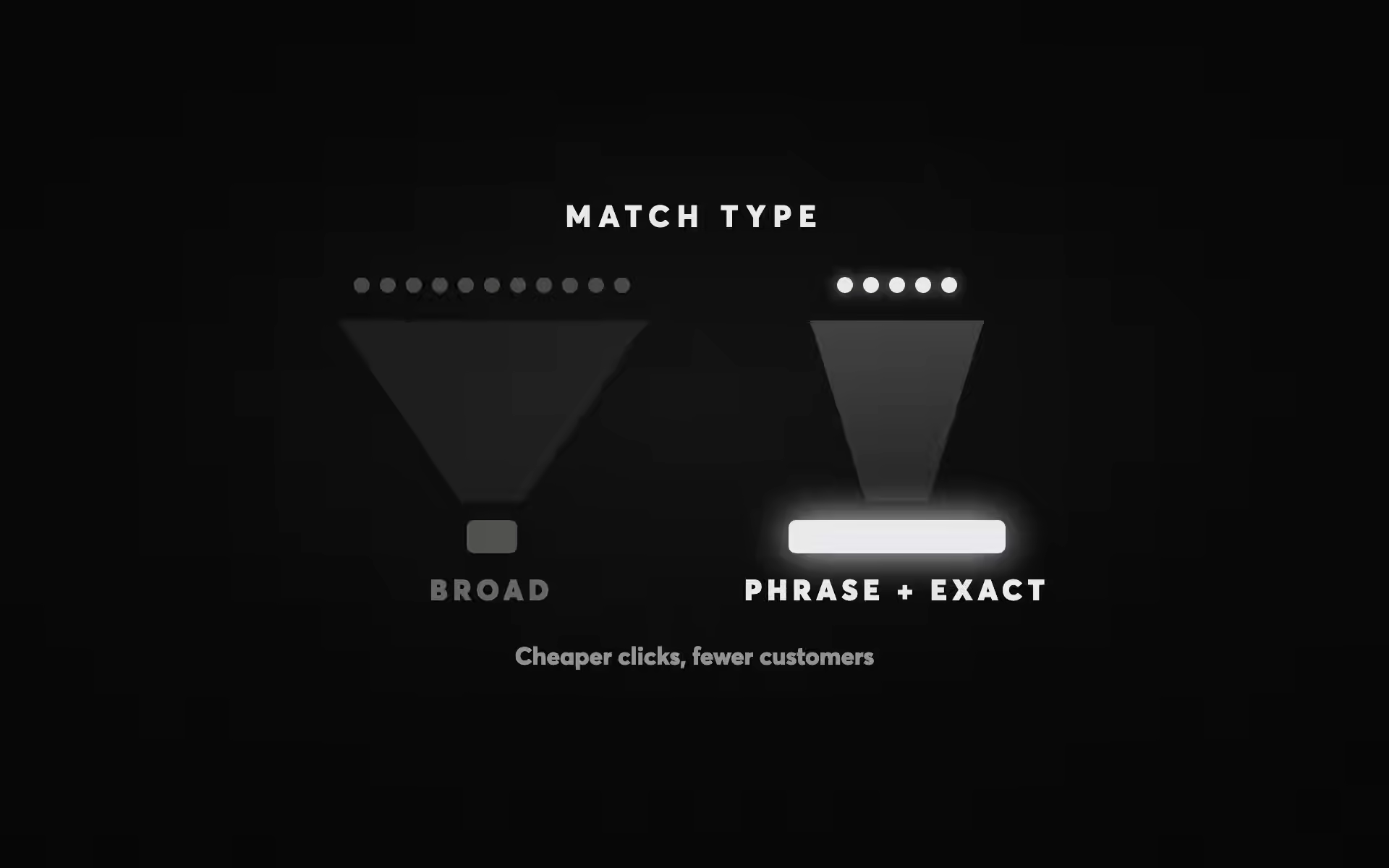
| Broad match | Phrase + exact | |
|---|---|---|
| Clicks | 900 | 260 |
| CPC | A$8 | A$26 |
| Spend | A$7,200 | A$6,760 |
| Landing page conversion | 1.8% | 5.5% |
| Enquiries | 16 | 14 |
| Genuinely qualified | 12% | 50% |
| Real sales conversations | 2 | 7 |
| Cost per real conversation | A$3,600 | A$966 |
Illustrative model, not a benchmark — the shape of the arithmetic, not the figures. Run it on your own CPCs, landing page conversion rate and qualification rate.
Software has a particular version of the problem. The cheap enquiry is often a genuinely interested human being — just one who will never buy.
Who broad match actually buys in software
- Students and researchers. Category terms are coursework terms. They convert on a whitepaper at an excellent cost per lead.
- Competitors. Doing exactly what you are doing: researching the category, downloading the comparison, sitting in your nurture sequence.
- Job seekers. Your category name plus “jobs”, and often without it — broad match will happily serve a careers-intent query your product ad cannot convert.
- Businesses ten times too small. The most expensive kind of unqualified lead, because sales will actually call them.
- Free-alternative hunters. “Open source”, “free”, “template”. A different buyer entirely.
None of that is fraud or bot traffic. It is real intent for something adjacent, and it converts on a form because the form asks nothing that would disqualify it.
Segment by vertical and persona, not by channel
The fix that has worked repeatedly is structural. Clinic to Cloud sells cloud practice-management software to Australian specialists and GPs — a consultative sale with a high qualification bar. Restructuring the account around who was buying and why cut blended cost per lead from A$227.27 to A$96.15 in the first four months on a 17% budget increase, while monthly lead volume rose 2.76×. The programme then ran eleven tracked months at a blended A$146.29 across 1,067 leads, and the retainer renewed every month for eighteen consecutive months.
The channels did not change. The segmentation did.
Three splits worth making before you touch bids:
- By vertical. A hospital administrator and a law firm partner read the same advertisement differently, and their leads cost different amounts. Give them separate campaigns, separate pages and separate ceilings.
- By persona. The evaluator, the economic buyer and the person whose job is to say no all search differently. The security page exists for the third one.
- By offer. A trial produces the most leads and the least qualified; a demo request the fewest and the most; a document sits between. Offer the lightest thing that still qualifies.
Optimise to the qualified demo, not the form fill
A trial signup, a demo request and a whitepaper download are moments in a cycle, not revenue. Optimising bidding toward them instructs the platform to find you more of the cheapest one.
The minimum viable fix is short: capture the click identifier on first visit, carry it into the CRM, and when a lead is qualified — not when it arrives — send that event back as an offline conversion. For most SaaS companies the qualified demo is the latest stage that occurs often enough for the bidding to learn from; the closed deal arrives too late and too rarely.
Where a product sells through partners the same discipline applies at a higher unit value. Recruiting Microsoft channel partners for rhipe across nine markets over four years, the measured outcome was A$1,278 per signed partner — 181 partners on A$231,263 of media. High-ticket recruitment over years, not high-volume leads in a month, and it only stays honest because the signed partner is what was counted.
Do this on your account
- Break your cost per lead apart by vertical and by offer. If the spread is wider than two to one, your blended target is doing damage.
- Move to phrase and exact and rebuild negatives around students, jobs, free alternatives and company sizes you cannot serve.
- Add two qualifying fields — company size and timing. Two, not six.
- Send the qualified stage back to the platform as an offline conversion, and judge everything on cost per qualified conversation from then on.
The underlying arithmetic is in broad match is the most expensive cheap traffic you can buy.
Questions