InsightsAI Marketing
Everyone Has AI. Almost No One Has a System.
Involve AOS is how Involve Digital runs a business’s whole marketing: website, search, paid ads, content and social, built for growth and checked by people.
29 September 20268 min readEdited by Michael Wilkins
Direct answer
Involve AOS is the system Involve Digital has built since April 2026 to run a business’s marketing end to end. It audits your website and plans a custom rebuild, plans SEO, AEO and GEO from your real data, covers the searches you can’t win organically with tightly controlled Google Ads, and keeps your content and social in the same plan. It is built for one outcome, growth: every ad account is checked every day, spend without results is flagged, and a person approves every change. Unlike standalone AI tools, it keeps a permanent record of every client and every change, so nothing gets lost and nobody has to re-brief it.
AI is everywhere now. Your competitors have it, your marketing team has it, and your agency almost certainly says it uses it. What almost nobody has is a system: one that holds the whole of a business’s marketing together, remembers every decision, checks the spend every day and keeps only what pays back.
That is what we built. Involve AOS is how Involve Digital runs a business’s marketing from end to end: the website, search, paid ads, content and social, all planned together and all pointed at the same goal. Here is what it does, and what it does for the businesses we work with.
A tool is not a system
“Everyone likes to think they are using AI well, but I highly doubt most agencies have built complete systems to run their operations.”
Michael Wilkins, founder of Involve Digital
An AI chat tool starts from whatever you paste into it. It forgets last month’s brief, runs out of room on long jobs, and knows nothing about your ad account, your website or your results unless someone copies them in. That is fine for a one-off question. It is not how you run a marketing programme that spends real money every day.
A system is different. It holds your whole account in one place, reads your live data before it recommends anything, and works inside rules and checks that a person controls. The rest of this article is what that means for your business, one part at a time.
Built for one thing: growth
Everything in Involve AOS is aimed at revenue and profit. Every channel, campaign and keyword has to earn its place, and the system is built to find what doesn’t:
- every linked Google Ads account is checked every day, and spend that isn’t producing results, such as a campaign with more than 100 clicks and no conversions in 30 days, is flagged to a strategist
- its campaign rulebook refuses the settings that make it easy to spend more for less (more on that below)
- conversion tracking is fixed before any spend is cut, so decisions rest on numbers you can trust
Our packages work the same way: no lock-in contract, cancel with 30 days’ notice. The work has to earn its keep every month.
It starts with your website
For most businesses, the website is where marketing money goes to leak. About half of mobile websites still fail Google’s Core Web Vitals, its pass-or-fail test for loading speed and responsiveness: only 48% pass on mobile (HTTP Archive Web Almanac 2025, July 2025 data). WordPress, which runs about 64% of sites built on a content management system, does worse: 45% of WordPress sites pass on mobile.
Our own audits tell the same story. Between 18 August and 17 September 2026, Involve AOS audited 281 Australian business websites, most of them businesses we were preparing to contact. That is not a random sample of the web, but it is a fair picture of the sites we see:
- of the 229 we could speed-test, only 6% scored in Google’s green band (90 or more) on the mobile PageSpeed test; the median was 58
- 82% scored below 70 out of 100 on our full audit
- on 44%, most pages had no meta description, the summary Google often shows in search results
- 26% had no structured data on any page we crawled, and 19% had no XML sitemap
Michael puts it more bluntly: most small-business websites are brochures online, a template chosen for its look that performs like everyone else’s. Involve AOS audits your site across seven areas (technical health, content, performance, answer engines, generative engines, Google’s AI Overviews and authority) and drafts the plan for a rebuild: the pages you need, what each one is for, and how it will load fast and read clearly to Google and AI assistants. Then our team builds it custom, from scratch. On our website packages, a new site goes live in 5–7 business days from the day your content lands.
Then it gets you found, on Google and in AI answers
A fast site still has to be found. Involve AOS plans the search work from your own data: your Search Console queries, the pages that almost rank, tracked rankings, and real search demand from Google’s Keyword Planner. It plans for classic SEO and for the newer answer surfaces too: AEO (being the answer an assistant gives) and GEO (being cited in AI-generated results). It drafts the content in the plan, and a person approves it before it is published. If AI search is new to you, here is how we measure GEO.
Paid search where organic can’t win
Some searches you will not win organically any time soon: the big, high-intent commercial terms where page one is held by directories and large players. Involve AOS sorts your commercial searches into two lists: the ones within reach organically, and the ones worth covering with Google Ads. Paid search goes where it earns its keep, not everywhere Google would like it to go.
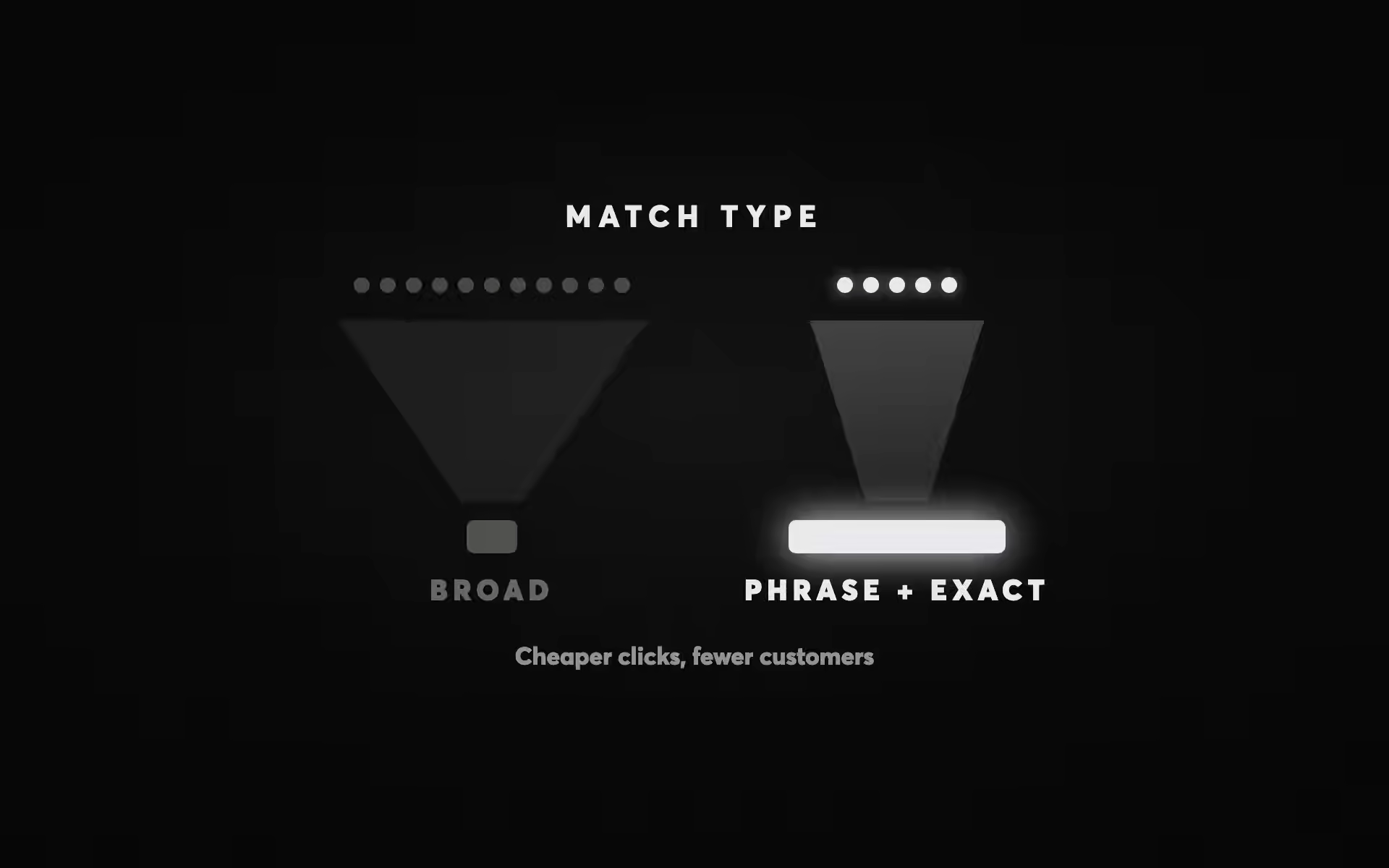
Michael’s view on this is blunt. Google markets broad match, Performance Max and AI Max as smarter ways to spend, and in practice they mostly hand Google the choice of which searches you pay for. That makes it easier to spend more without getting more. So our system’s rulebook doesn’t allow them: phrase and exact match only, no Performance Max, no AI Max. That rule isn’t a guideline in a document. The campaign builder rejects a broad-match keyword outright.
Here is why, on the same budget:
| Broad match | Phrase + exact | |
|---|---|---|
| Clicks | 1,000 | 300 |
| CPC | A$6 | A$18 |
| Spend | A$6,000 | A$5,400 |
| Landing page conversion | 2% | 6% |
| Enquiries | 20 | 18 |
| Genuinely qualified | 15% | 55% |
| Real sales conversations | 3 | 10 |
| Cost per real conversation | A$2,000 | A$540 |
Illustrative model, not a benchmark or a client result. The point is the shape of the arithmetic: cheaper clicks, fewer real conversations. The full breakdown is in broad match is the most expensive cheap traffic you can buy.
Every account checked, every day
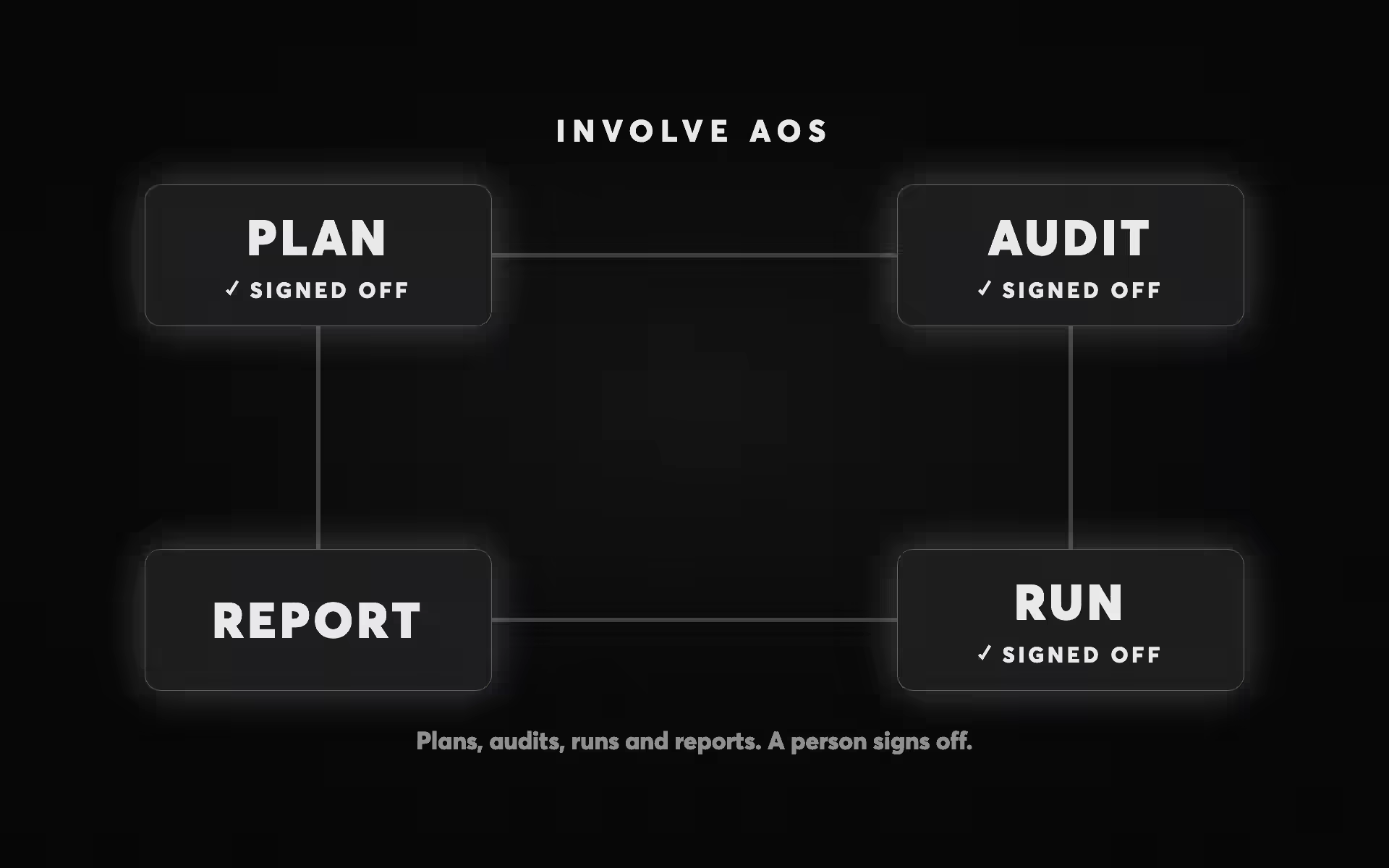
Every day, Involve AOS reads every linked Google Ads account and flags the things that waste money: a campaign that has stopped showing, or clicks that aren’t turning into conversions. A strategist reviews what it finds. When a fix is needed, the system builds it, checks it against the rulebook, and nothing changes in your account until a person approves it.
That is the balance we think AI marketing needs: the speed of software, with a person accountable for every change that touches your money.
Content and social, in the same plan
Involve Digital also looks after your content and social media, planned alongside everything else rather than in a separate silo. Our content engine drafts articles and social posts, a person reviews every one before it goes out, and your social ad results sit in the same report as the rest of your marketing. One team, one plan, one report.
Why it works: the system underneath
The benefits above rest on four things most AI setups don’t have:
- Persistent memory. Every client has one record: who they are, what they buy from us, the briefs, the connected data. Every AI agent starts by loading it, so context isn’t lost between meetings and nobody re-briefs the system.
- AI execution with human guardrails. The AI does the heavy lifting: audits, plans, campaign builds, drafts. People approve every change to your ad accounts and every piece of content before it is published.
- A log that can’t be edited. Every audit, plan, approval and change is written to a log that the database itself will not let anyone change or delete, so every decision can be traced back to what it was based on.
- Planning to reporting, end to end. The audit feeds the strategy, the strategy feeds the campaign build, and the results come back into your report: spend against return, month by month.
It runs on Claude, by Anthropic: Claude Fable 5.1 for planning, and Claude Opus 5 for execution, moving to Opus 5.5 as soon as it passes our tests. It is not finished, and it will not be. In Michael’s words: “It’s obviously not finished yet and I doubt it ever will be.” That is the point of building it ourselves.
Faster, and a fraction of the cost
Because the system does the heavy lifting, the work moves faster. A full website audit lands within one working day of your request. A new website on our packages goes live in 5–7 business days from the day your content lands.
It also costs less. Compare the alternatives:
- Hiring in-house. A digital marketing manager is advertised at about A$100,000 to A$120,000 a year in Australia (SEEK, updated January 2026), before 12% superannuation (business.gov.au), payroll tax, leave and tools. That is roughly A$9,300 to A$11,200 a month for one person.
- A traditional agency. Australian agencies that publish prices start at a median of A$1,470 a month for SEO and A$1,250 a month for Google Ads management, before ad spend (Digital Nomads HQ’s review of 180 agency websites, June 2026: an agency’s own research into advertised starting prices).
- Involve Digital. Our website and marketing packages start at A$297 a month. Growth, with monthly SEO, is A$497 a month, and Google Ads management starts at A$500 a month plus ad spend. Prices exclude GST.
That index leaves out low-cost packaged offers like ours, and that is the point. The system is what lets us package this work at these prices.
What it won’t do
- It won’t change your bids or your campaigns on its own. A person approves every change.
- It won’t promise you a forecast. It models budgets against live search demand and shows its working.
- It won’t run broad match, Performance Max or AI Max.
- It won’t take credit for results it didn’t produce. The results in our case studies belong to the campaigns that produced them.
See what it would do for your business
The quickest way to see Involve AOS at work is on your own website. Request a free audit: the system crawls up to 50 pages and scores seven areas, a person reads the report before it is sent, and it lands within one working day. Or talk to us about letting Involve Digital run your marketing.
Questions