InsightsPaid Media
Broad Match Is the Most Expensive Cheap Traffic You Can Buy
Broad match is cheaper per click and more expensive per customer. The arithmetic run four ways, why the Google Partner badge quietly pushes agencies toward it, and a real teardown of an account spending 63% of its budget on words it never owned.
19 September 20268 min readReviewed by Michael Wilkins
Direct answer
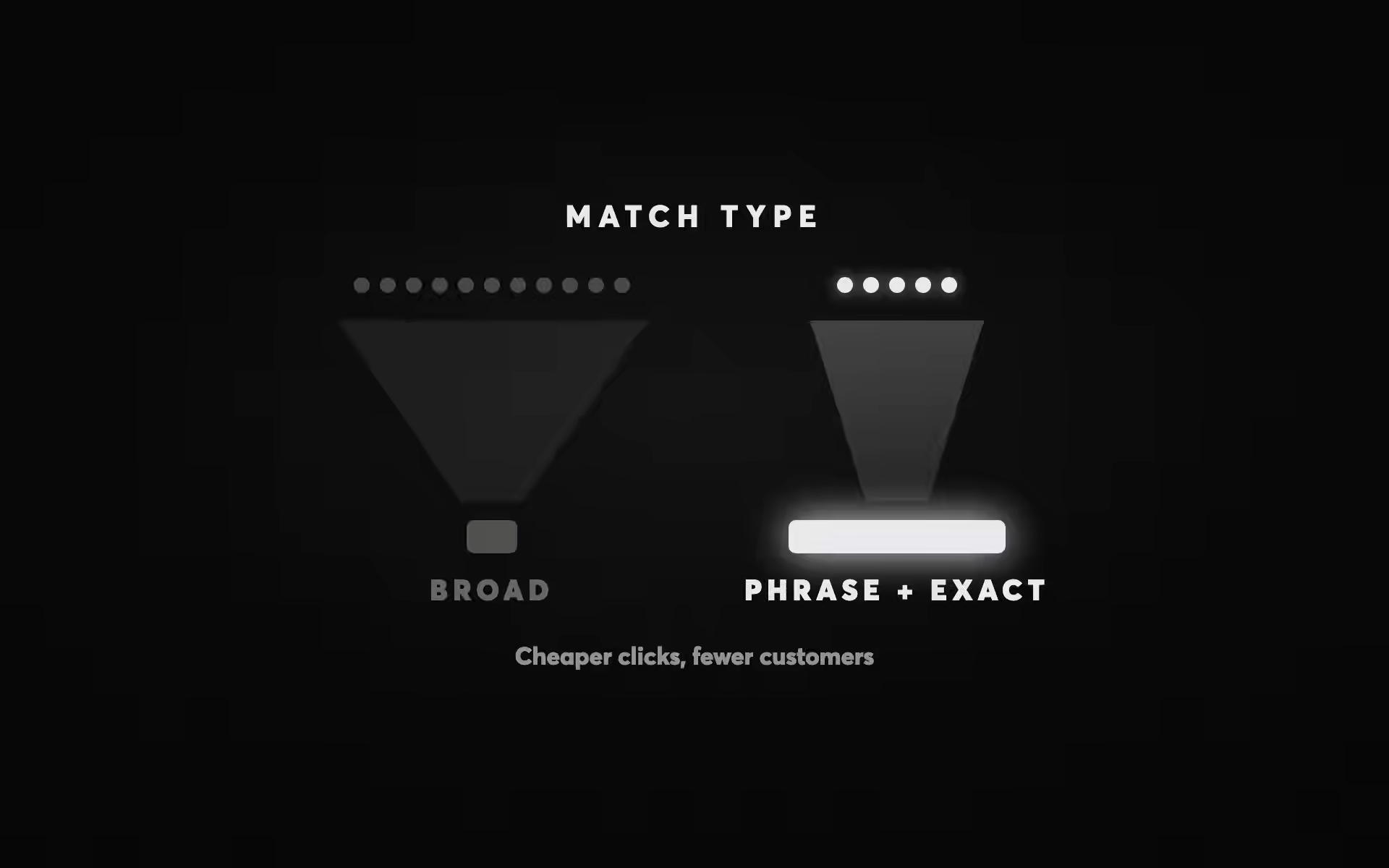
Broad match usually produces a lower cost per click and a higher cost per customer. On a like-for-like budget, phrase and exact match typically buy roughly a third of the clicks at two to three times the CPC, but convert at a materially higher rate on the landing page and qualify at several times the rate in the sales conversation — so the cost per real sales conversation lands far lower. Involve Digital runs paid search on phrase and exact match by default, with negatives rebuilt monthly from the search terms report, and reserves paid budget for commercial category terms that cannot realistically be won organically inside a year. An audit of one inherited Australian account scored it 35/100 with about a third of spend reaching traffic that could never convert, including a Performance Max campaign that turned 174,000 impressions into one conversion.
The cheapest click is usually the most expensive
Every account we inherit has the same instinct baked into it: get the cost per click down. It is the number the platform puts in front of you, it is the number that moves when you change match type, and it is the number that feels like efficiency.
It is also the number least connected to revenue.
Here is the same budget spent two ways. Same product, same landing page, same sales team. The only difference is match type.
| Broad match | Phrase + exact | |
|---|---|---|
| Clicks | 1,000 | 300 |
| CPC | A$6 | A$18 |
| Spend | A$6,000 | A$5,400 |
| Landing page conversion | 2% | 6% |
| Enquiries | 20 | 18 |
| Genuinely qualified | 15% | 55% |
| Real sales conversations | 3 | 10 |
| Cost per real conversation | A$2,000 | A$540 |
Illustrative model, not a benchmark. The point is the shape of the arithmetic, not the figures — run it on your own CPCs, your own landing page conversion rate and your own qualification rate.
Broad match bought three and a bit times the traffic and two more enquiries. It also produced a third as many real sales conversations, at nearly four times the cost each.
Nothing in that table is a trick. Broad match genuinely is cheaper per click. It genuinely does produce more enquiries. Both of those facts are true and both of them are irrelevant, because neither is what you are buying. You are buying conversations with people who can become clients, and on that measure the expensive traffic was cheaper by a factor of four.
What broad match actually buys
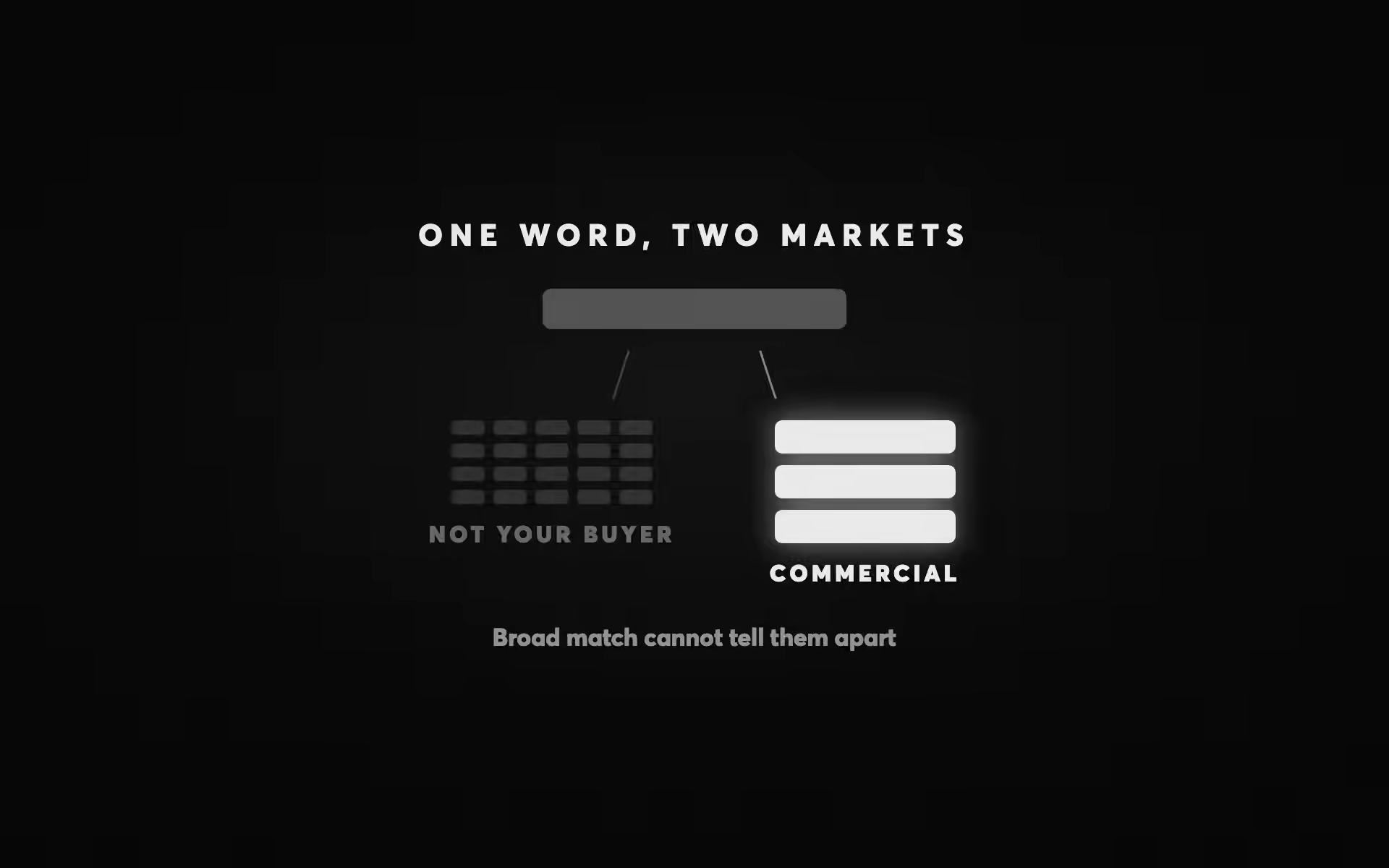
Broad match does not match your keyword. It matches Google's model of what your keyword is about — which means it matches the adjacent profession, the student, the job seeker, the competitor doing research, the person who wanted something that merely sounds like what you sell.
We can put a number on that, because we audited it. When we took over the Google Ads account for a pre-qualified traffic management contractor, our audit scored the inherited account 35 out of 100, with roughly a third of spend going to traffic that could never convert. The specifics recur in almost every account we inherit:
- A Performance Max campaign that turned 174,000 impressions into a single conversion. Broad automated inventory with no conversion signal worth learning from is a budget shredder in a low-volume, high-value category.
- Competitor brand keywords carrying quality scores of 1 and 2 — the lowest Google issues — producing nothing.
- A meaningful slice of budget on job-seeker intent: people searching for traffic controller courses and traffic control jobs. An ad for commercial traffic management cannot convert a job seeker.
- Every ad pointing at the homepage, because there were no service pages to point them at.
That last point matters more than it looks. Match type and landing page are the same decision viewed from two ends. A tightly matched query deserves a page that answers it; a broadly matched query has no page that could.
Why the higher CPC is the point, not the cost
Phrase and exact match cost more per click for a reason that is worth understanding rather than resenting.
Google prices a click on a blend of what competitors will pay and how relevant it believes you are. On an exact, high-intent commercial query, everyone who sells what you sell is bidding, and they are bidding because that query converts. The price is high because the intent is high. You are not being penalised; you are being quoted the market rate for a buyer.
Broad match is cheap for the mirror-image reason. Much of what it serves you is uncontested, because nobody else wants it either.
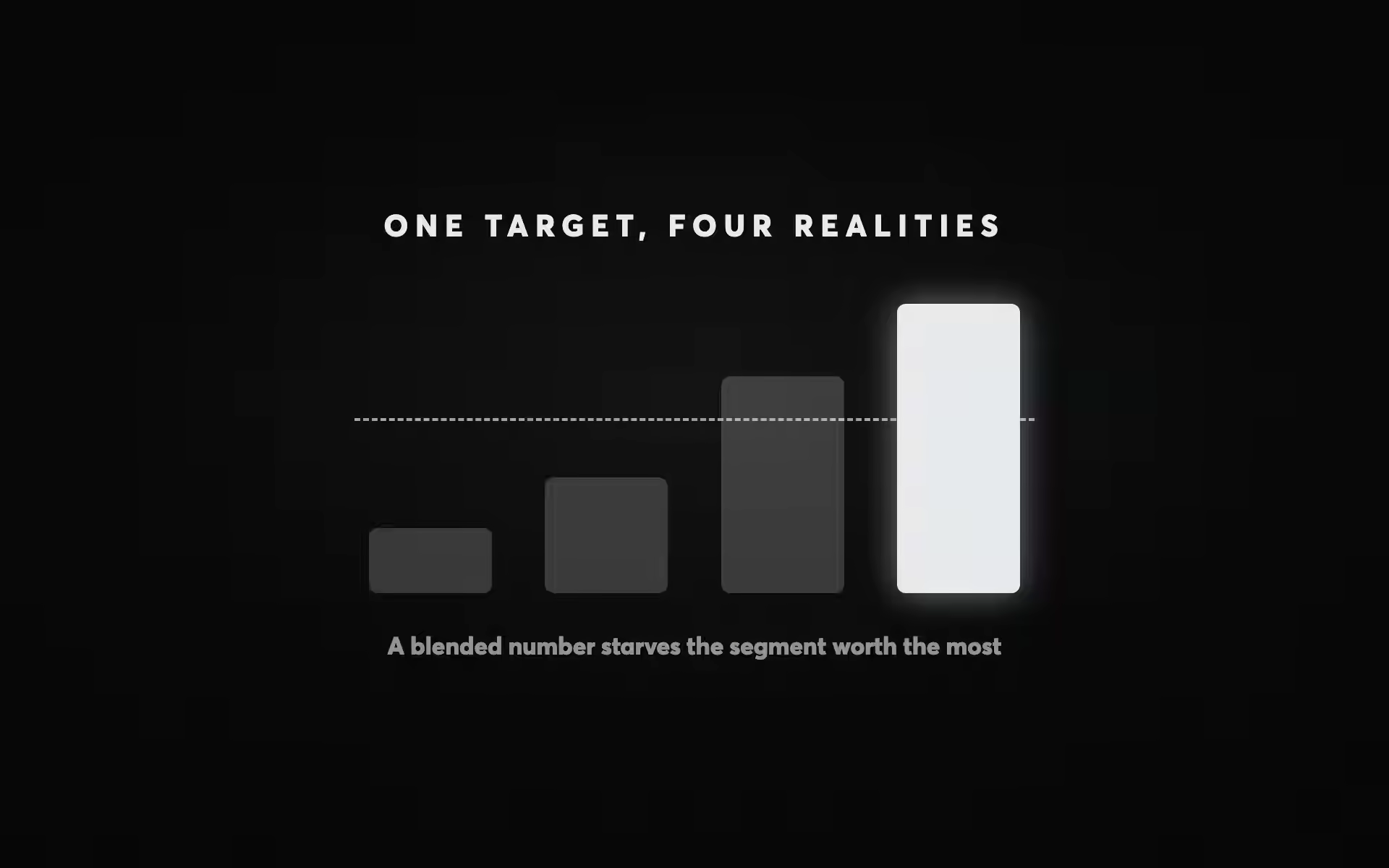
The spread inside a single account can be enormous. Running enterprise software lead generation for a global vendor across legal, finance, government, healthcare and law enforcement, we delivered cost per lead of US$14.66, US$26.17, US$57.53 and US$82.14 in the same programme — a 5.6× spread, driven entirely by vertical and offer difficulty. A single blended CPC target would have hidden every one of those differences and starved the segment worth the most.
The incentive nobody mentions
There is a structural reason so many accounts drift toward broad match, and it has nothing to do with the accounts.
The Google Partner badge requires an agency to maintain a minimum 70% optimisation score across the accounts it manages. Optimisation score is Google's own metric, assembled from Google's own recommendations — and expanding to broad match sits among them.
The mechanic is the interesting part. A pending recommendation drags your score down. Applying it lifts the score. And dismissing it also lifts the score, because dismissing removes its weight from the calculation entirely.
So an agency can hold its badge while running phrase and exact only — but it has to go in and dismiss each broad-match recommendation, deliberately, on every account, forever. The agency that does nothing watches its score drift toward the threshold. The agency that clicks apply is rewarded instantly, and its client's budget empties faster.
We are not going to tell you what Google intended by any of that. We will simply note which behaviour takes one click and which is a standing chore, and which of the two spends your money quicker. Anyone who tells you the badge is a quality signal has not read how the score is calculated.
Sources: Google Partners programme requirements · About optimisation score. Partners are not required to adopt every recommendation or reach 100%.
The other way budget disappears: paying for words you do not own
Match type is one half. The other half is which words you bid on at all, and the most expensive mistake there is subtler.
We audited an Australian B2B software company's account recently. Their own company name cost 90 cents a click and produced enquiries at $74 each — the best line in the account. The name of one of their products cost $12.55 a click and produced zero. Fourteen times the price, same account, same 90 days.
The product name is also a common English word. Search it and page one is a mattress brand, a text editor and a species of snail. They will never rank for it. The $12.55 was not the price of defending a brand; it was the price of entering an auction full of people selling mattresses, and losing.
Across the account, 63% of budget went on bare product names they did not own and could never rank for, while the category terms an actual buyer types took 19% — and the best of those sat paused.
The full teardown, including the two-word fix already sitting unused in the account and the four checks to run on your own, is in why your brand keywords cost 14× more than they should.
Organic owns what you are called. Paid buys what you do.
That is the whole division of labour, and almost every wasted search budget we have audited has it backwards.
- What you are already winning organically, do not rent. Bid a little on your own name to hold the result against competitors, cap it hard, and move on.
- What you can realistically win organically in six to twelve months, build. Specific, narrow, answerable questions where the competition is thin. A specialist commercial broker we rebuilt went from eleven years without a decent website lead to ten enquiries in the first month, first organic result for its money search, and named in Google's AI Overview beside firms a thousand times its size — earned by having the most specific pages on a narrow subject, not bought.
- What you cannot win organically in the near term, buy. Contested category terms owned by directories and incumbents are exactly what a paid budget is for. That is not a failure of your SEO; it is the correct use of media.
- What you will never own, walk away from. Generic English words that happen to be your product names belong to whoever has been using them longer.
The same arithmetic, four verticals
The shape holds everywhere. What changes is the CPC, how much junk broad match drags in, and how far apart the two qualification rates sit — and each vertical leaks in its own particular way, which is why each one gets its own teardown:
- Commercial insurance broking — the word “insurance” is shared with personal lines, claimants, students and job seekers, and the qualification gap is the widest of any vertical we run.
- B2B SaaS — cost per lead varied 5.6× inside a single enterprise programme, so one blended target starves the segment worth the most.
- Trades and local services — broad and exact produce the same number of enquiries here and differ several times over in quoted work; one inherited account audited at 35/100.
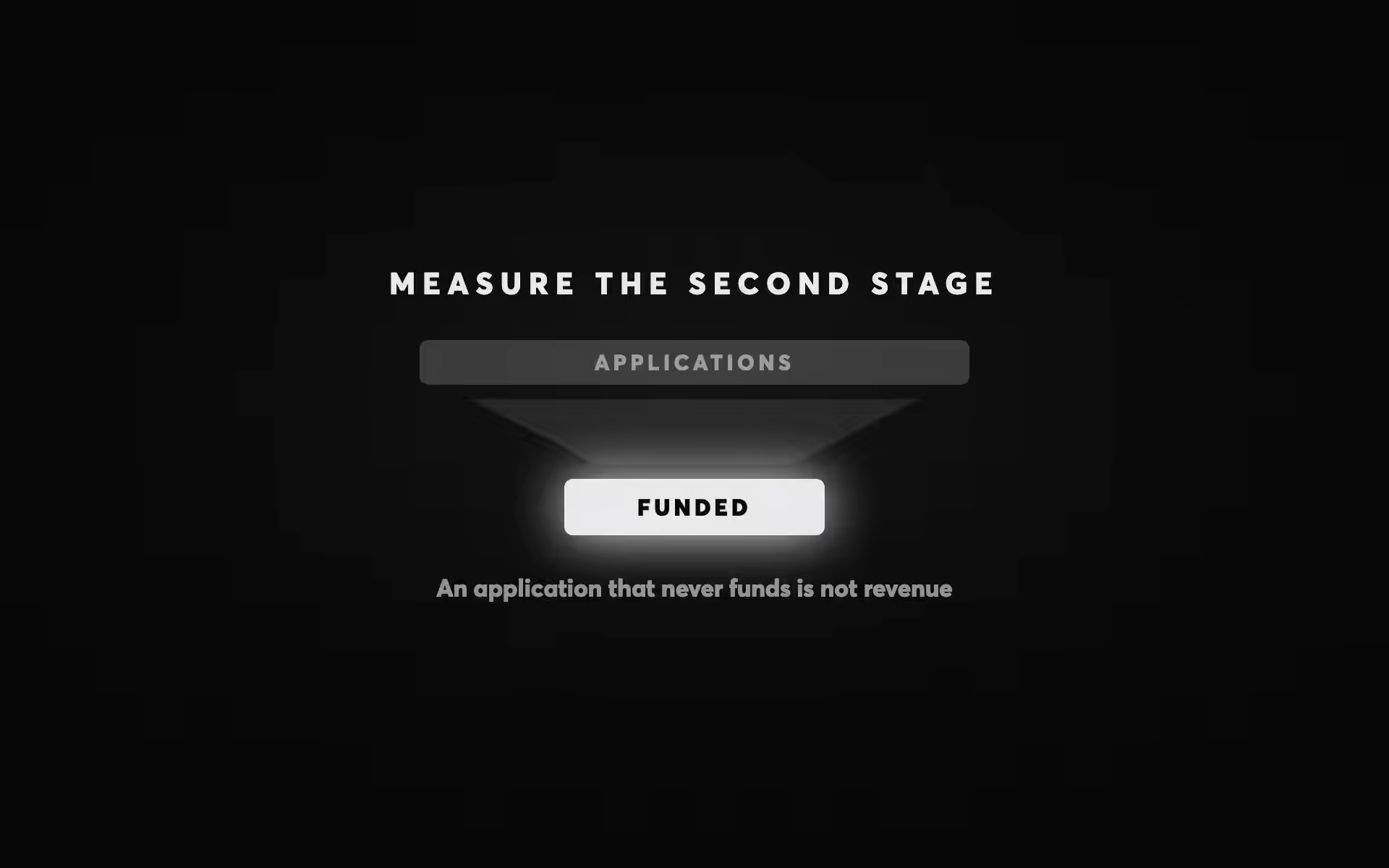
- Financial services — regulated categories carry structural waste before the creative is touched, and the measured event belongs at the funded customer, not the application.
What we actually do
- Phrase and exact only, to start. Broad match is not banned forever, but it is not how an account learns. It is what you might add once you have enough conversion data for the bidding to have something true to optimise toward.
- One campaign per thing you sell, one page per campaign. If the ad makes a specific promise, the landing page has to keep it.
- A negative keyword list built from the search terms report, monthly. Courses, jobs, salary, free, template, DIY, and every adjacent profession. This is where the wasted third lives.
- Brand separated from generic, and capped. Otherwise brand's cheap conversions flatter the terms that are losing money.
- Measure to the qualified conversation, not the form fill. Feed the qualified stage back to the platform so the bidding optimises toward clients rather than enquiries.
- Decide organic and paid together, on one screen. The question "should we buy this" cannot be answered without knowing whether you can earn it.
Run this on your own account
Four checks, about an hour:
- Sort your keywords by match type and compare cost per qualified enquiry, not cost per click and not cost per enquiry. If you cannot produce that number, that is the finding.
- Google every product name on its own, incognito. If page one is full of things that are not you, you are not defending a brand — you are buying a word.
- Compare the bare version against the qualified version — product name alone versus product name plus company name. If you have both running, the answer is already in your account.
- Add up what share of spend goes on your own names. Above roughly 40–50% you have a reporting problem as well as a media problem: your numbers look good because brand always looks good.
The line worth keeping: organic owns what you are called, paid buys what you do. Get it the wrong way round and you will spend two-thirds of your budget renting words you will never own, while the terms your actual buyers type sit paused.
Questions