Case studiesHealth & Fitness
Coach
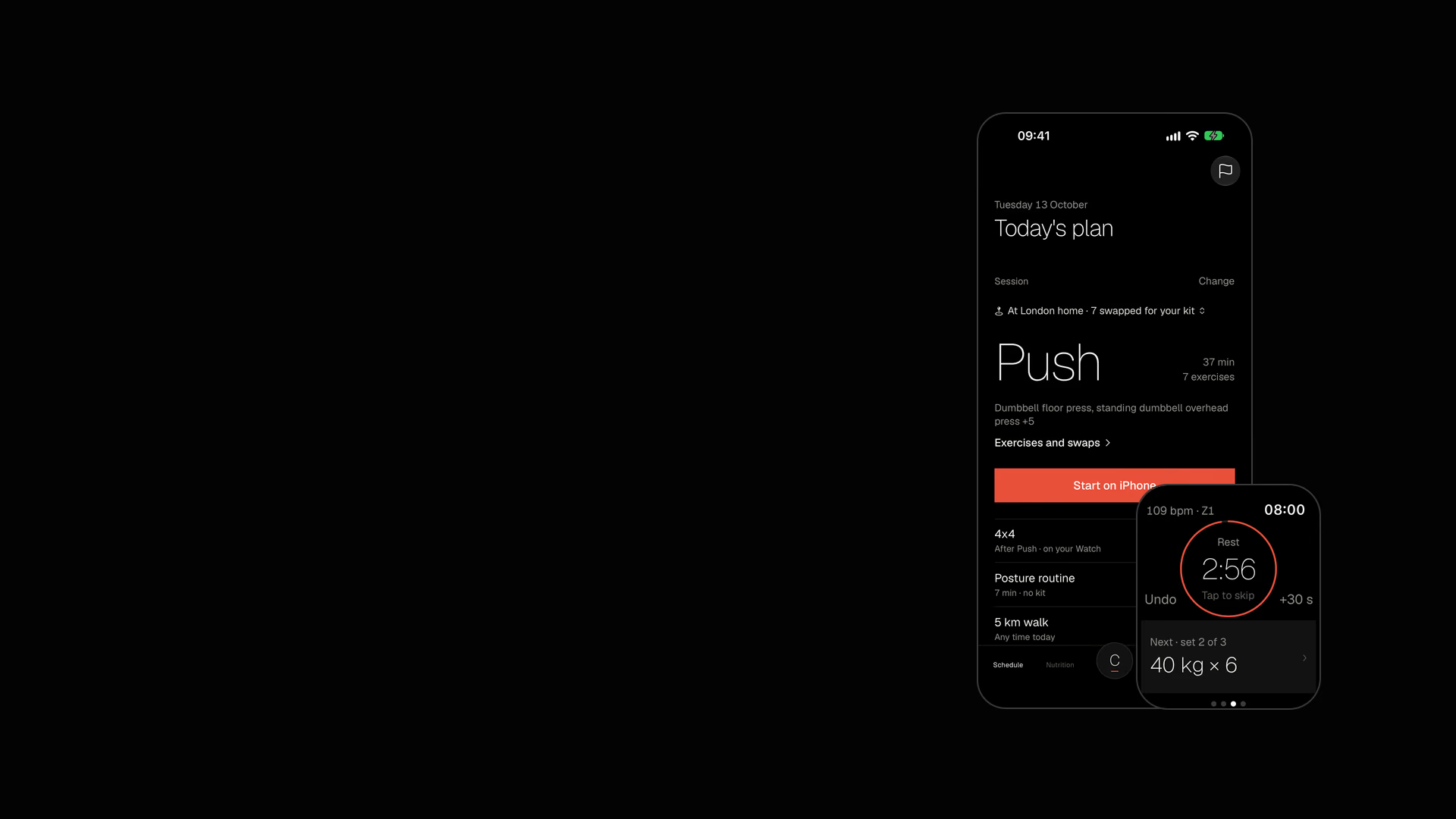
An AI strength coach and nutritionist for iPhone and Apple Watch, built in a month by a founder who does not write code. He directed AI coding agents in plain English and trained with the app every morning, and nothing reached his devices without passing about 1,500 automated tests.
Outcome
to build a native iPhone and Apple Watch app with AI coding agents
Client
Industry
Region
Services touched
- AI
01The challenge
Workout apps log sets. He wanted a coach, and he cannot write code.
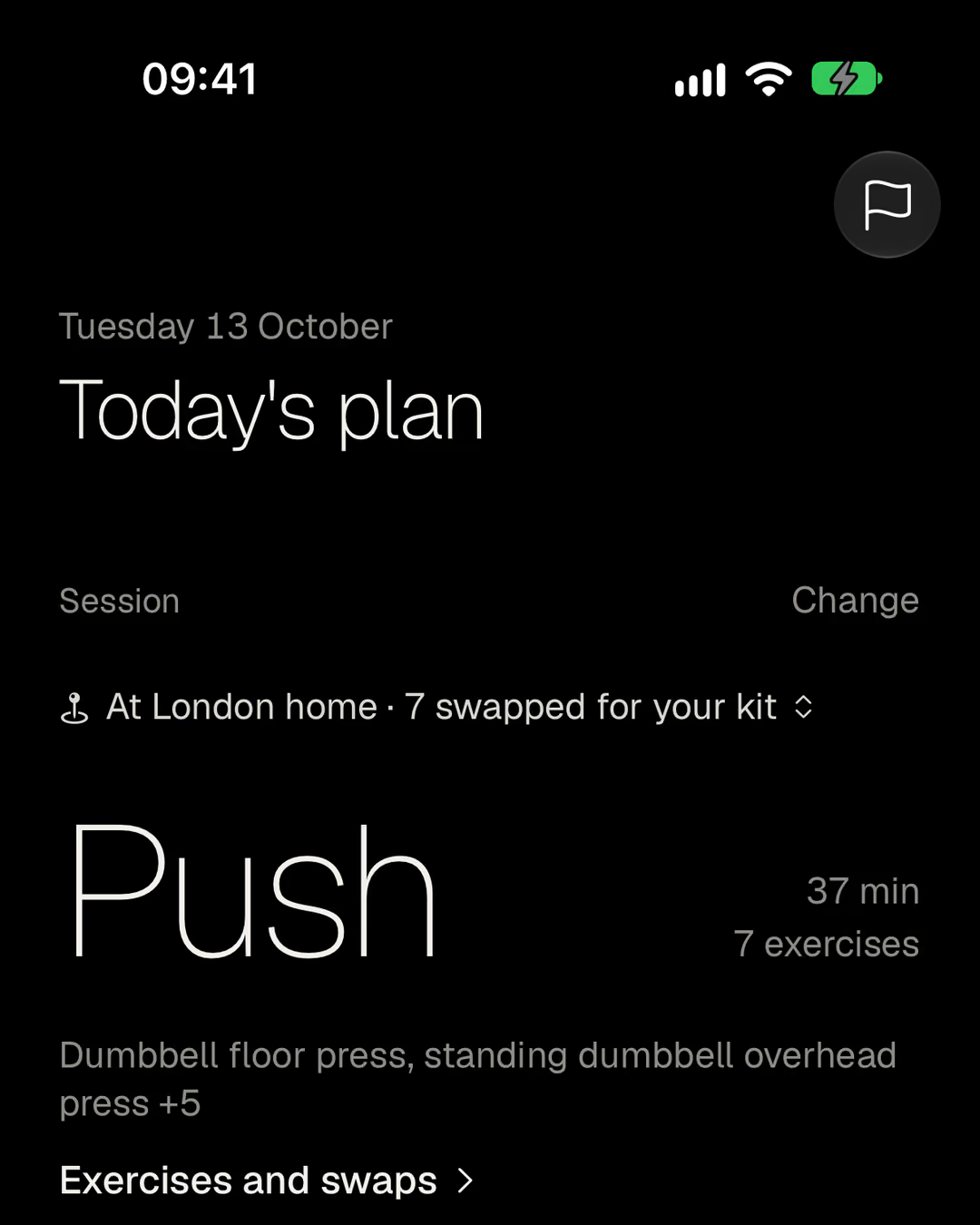
Coach is our own product. Our founder, Michael Wilkins, trains early: 3am sessions in a 24-hour gym in New Zealand, and at home when he is in London. The apps he had used log sets well, but none of them coach. He wanted one coach for training, food and sleep that adapts to where he is, the kit in front of him, how he feels that morning and how he is tracking against his goals.
He is not a developer and is not comfortable in a terminal. So the project doubled as a test of how we build software now: could a founder direct AI coding agents in plain English and end up with a real native app, not a prototype?
He set one rule for the design: design for 3am. Everything has to be readable and usable half asleep, on a Watch, between sets.
02The approach
Agents wrote it. Tests, simulators and each morning's training checked it.
Claude Code, Anthropic's coding agent, wrote and tested all of it. A lead agent planned each piece of work and sent the large pieces to parallel agents, each working on its own copy of the code with its own simulators. Each piece came back with tests, and separate reviewer agents checked the code through five lenses at every major step, along with exercise form and usability. Michael never wrote a line. He made the product decisions, tested on his own devices and flagged problems from the gym floor with a Flag button built into the app.
Verification did the work that trust would otherwise have to do. About 1,120 unit tests run on a Mac in seconds, about 190 more cover the server gateway, and about 220 interface tests tap the iPhone and turn the Watch's Digital Crown in the simulator. Nothing reached his devices without passing, and both devices are backed up before every install.
Real use was the test plan. Each morning's session wrote a diary on the device, a log of screens, taps, Crown values and errors that never leaves it. The agents read the diary and fixed what it showed, often before he was home from the gym: starting weights that were far too light, a heart-rate gap on the treadmill, a dictation feature that took four seconds to start and returned nothing.
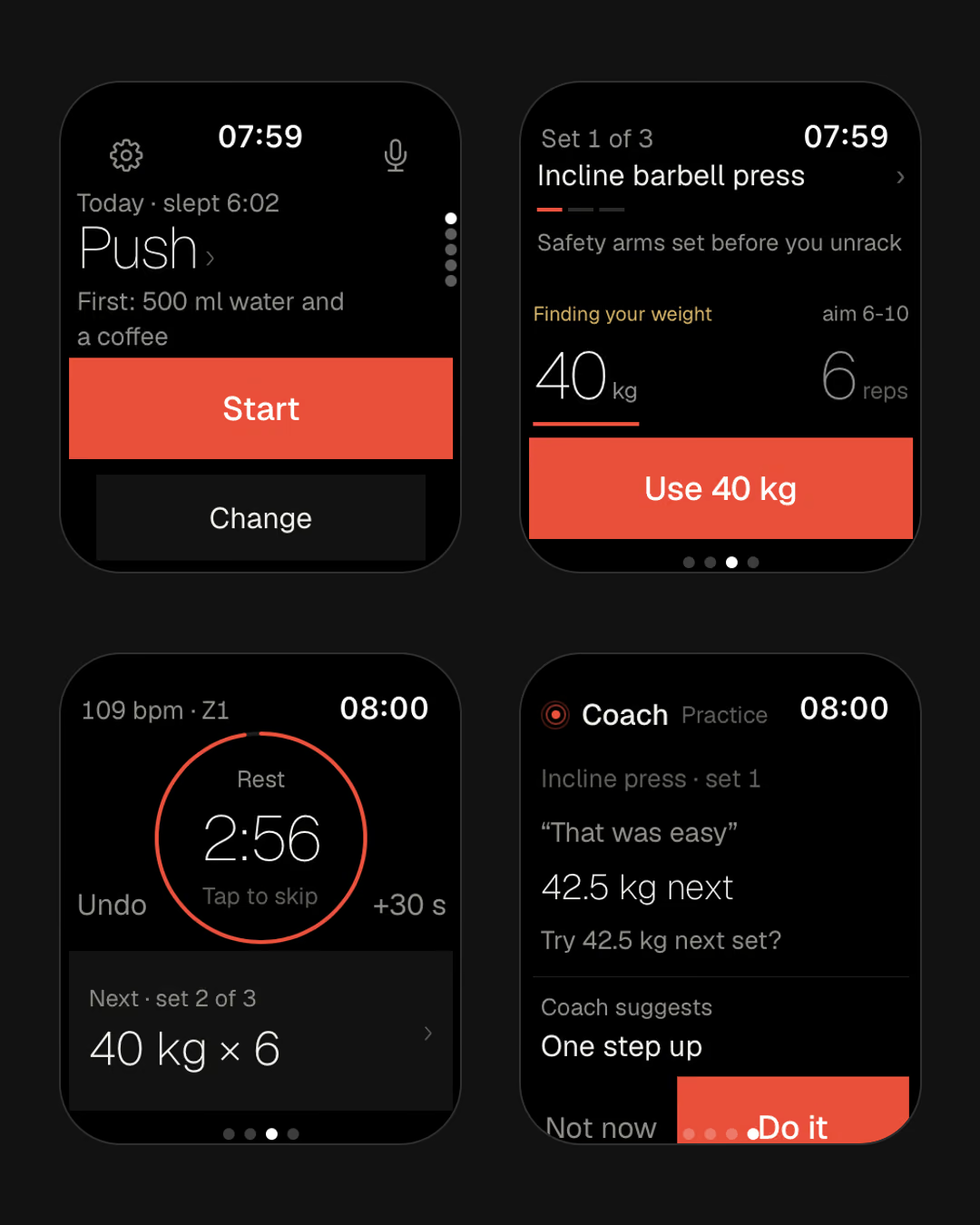
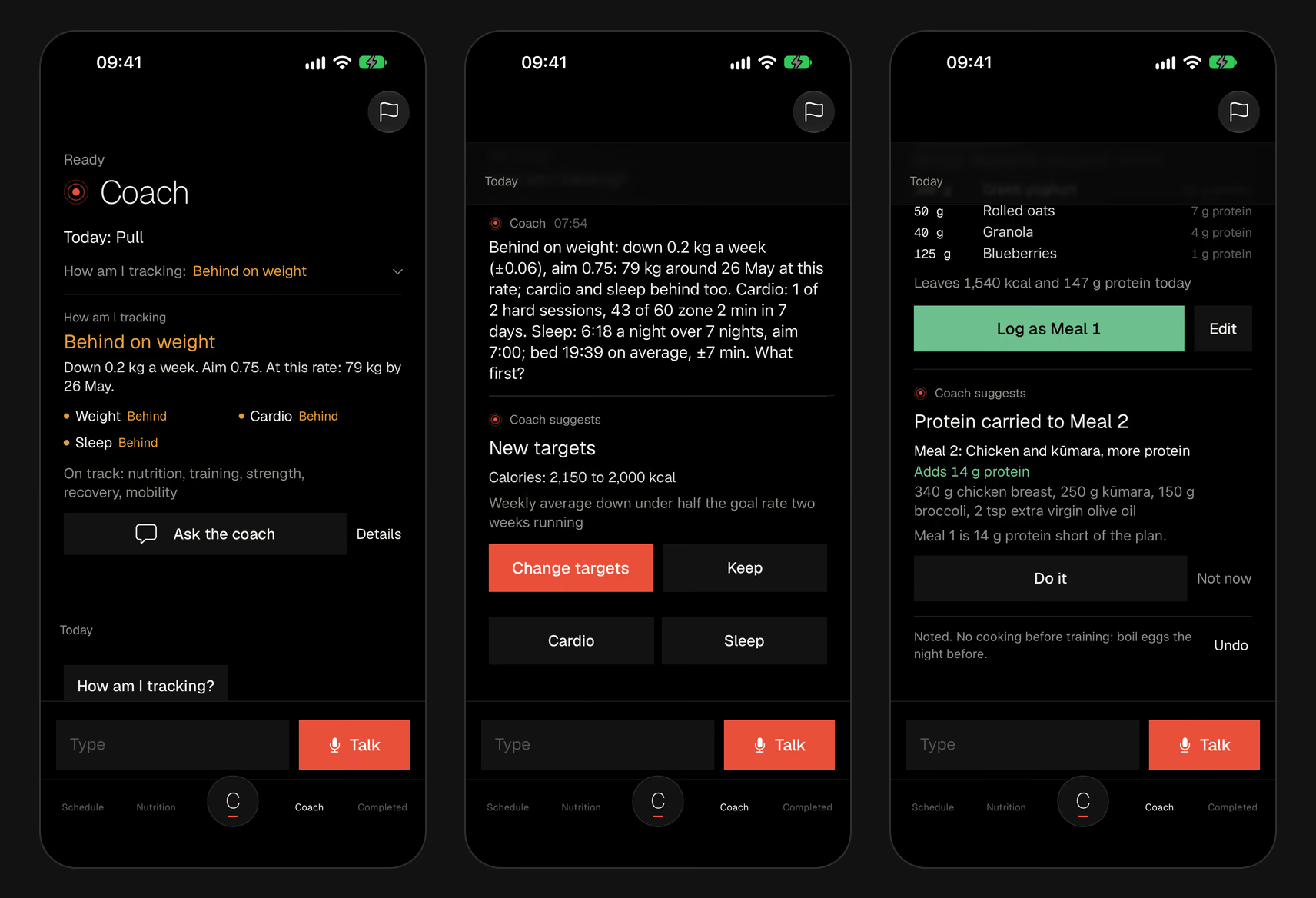
The same discipline applies to the AI inside the app. The coach can be spoken to at any point, mid-set included, but it cannot change anything directly. The model proposes changes as structured operations: swap an exercise, drop a set, rest today, move a session. The app checks each one against its own safety rules before applying it. Small changes apply at once with Undo, and bigger ones wait for a tap on Do it.
03The result
A native app on two devices in a month, in daily use from day four.
The first commit was on 10 October 2026. Two days later the app was running on his iPhone and Apple Watch, and on 14 October he logged his first real session with it, at 3am. By 11 November the project stood at about 455 commits: about 108,000 lines of Swift across 413 files, a 5,000-line server gateway, and 33 design documents written and approved before the code they describe.
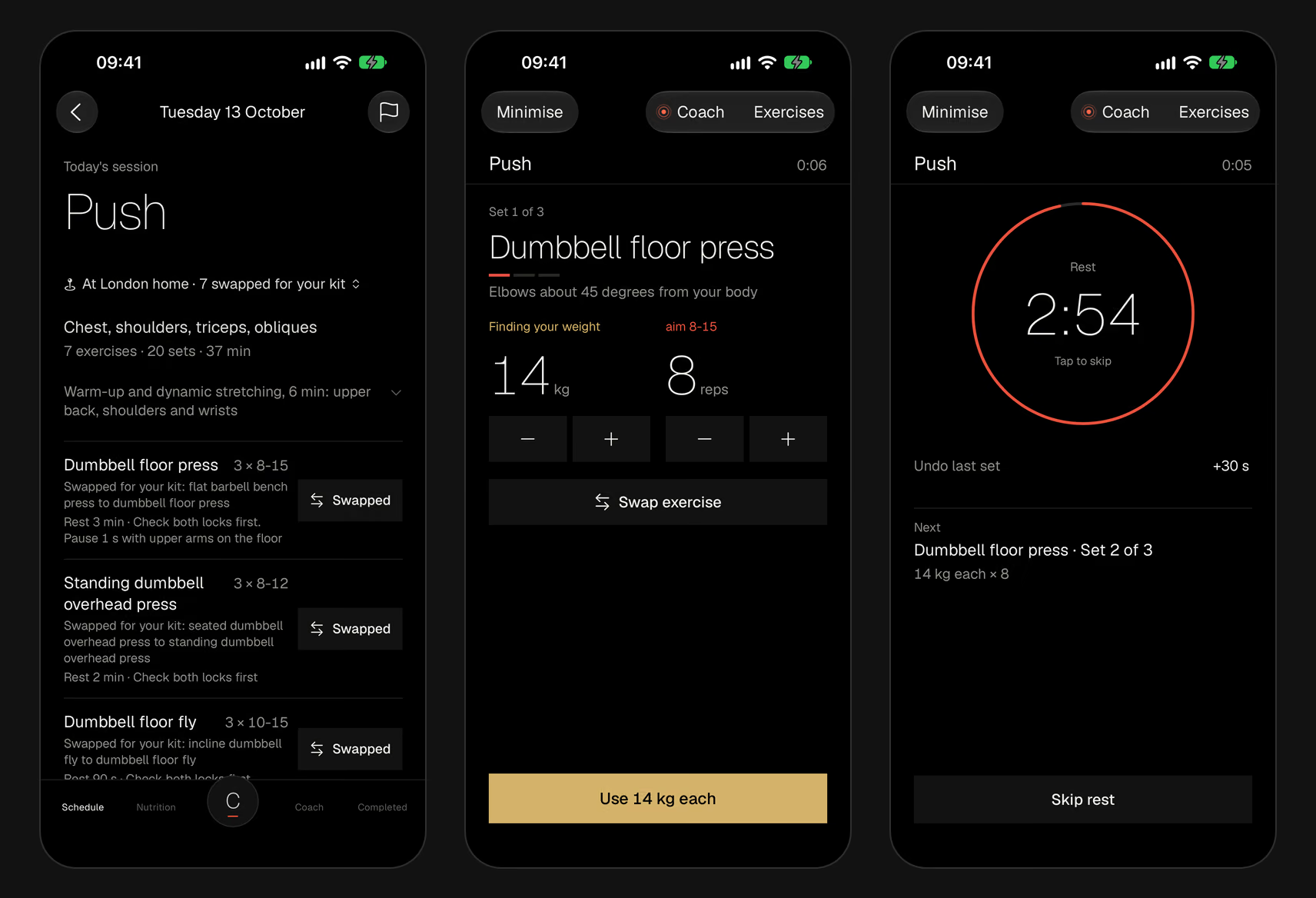
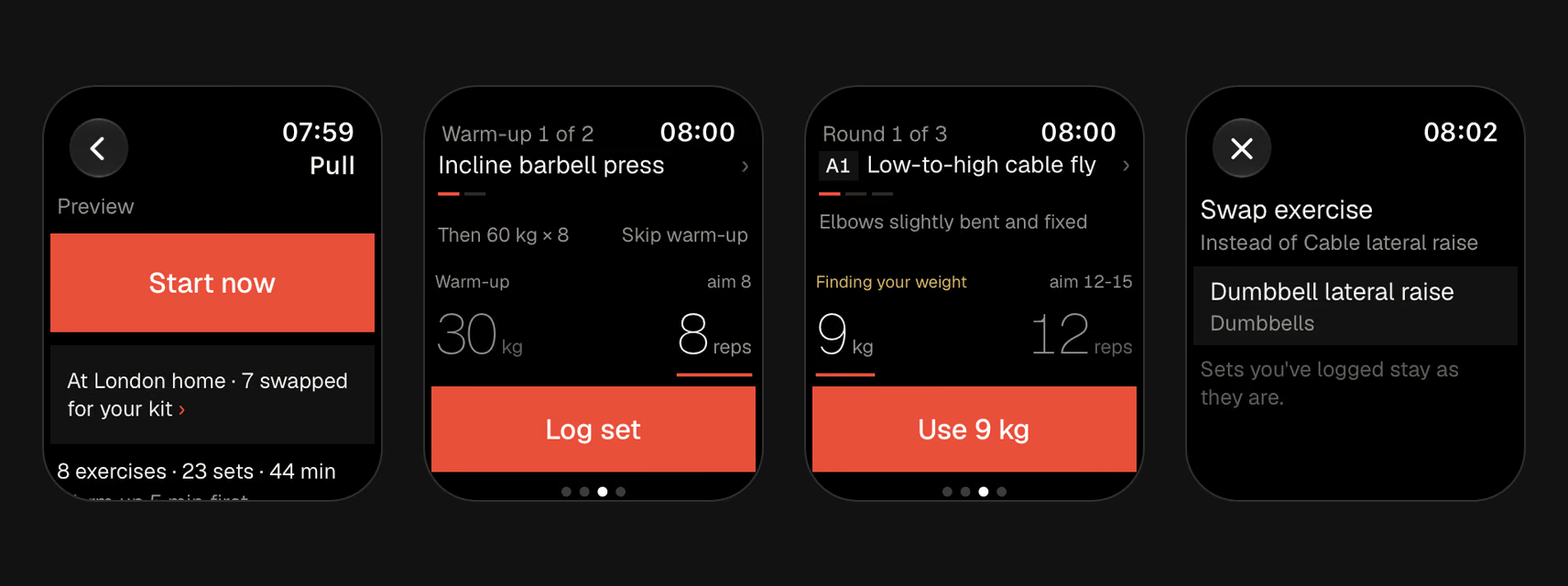
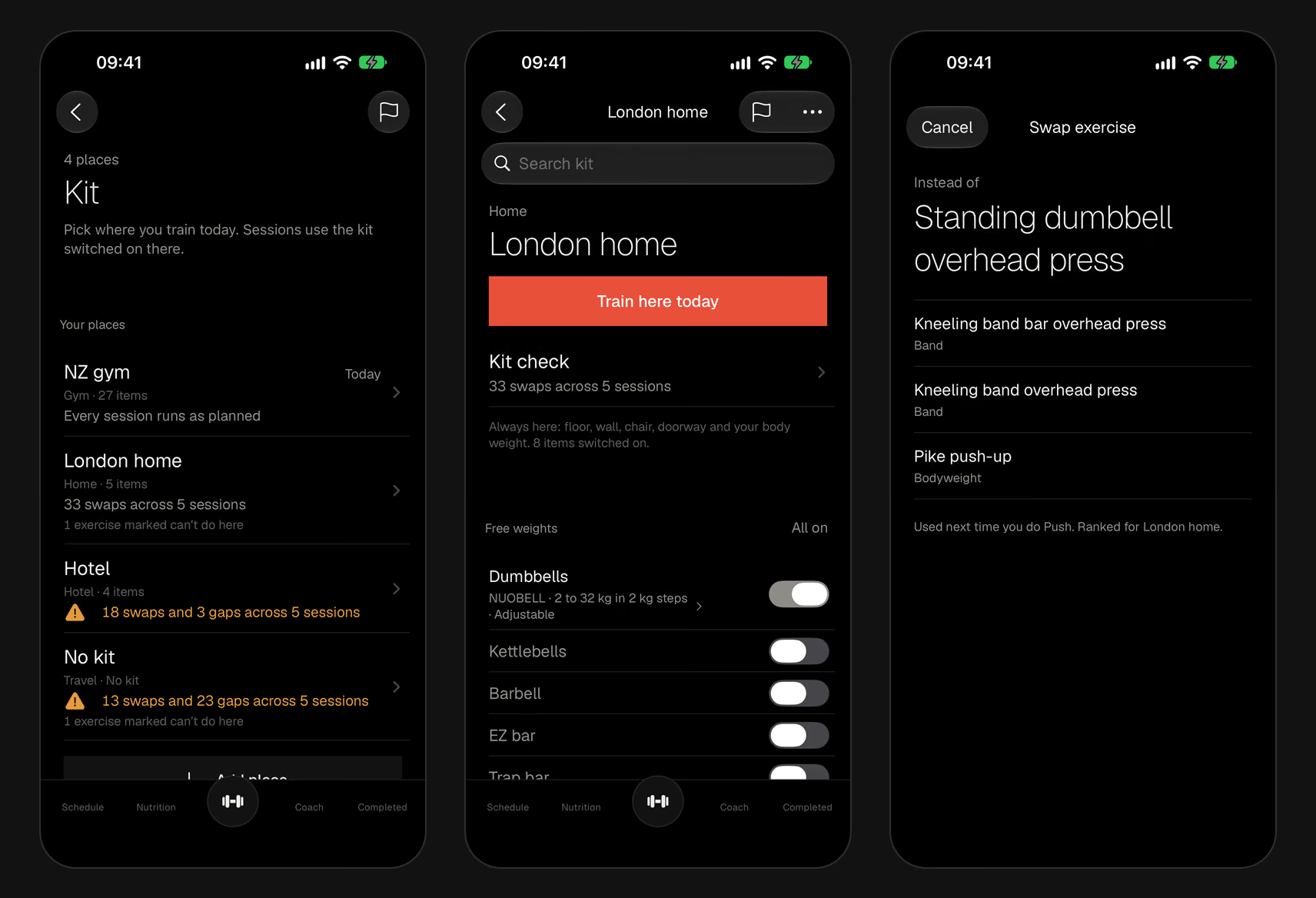
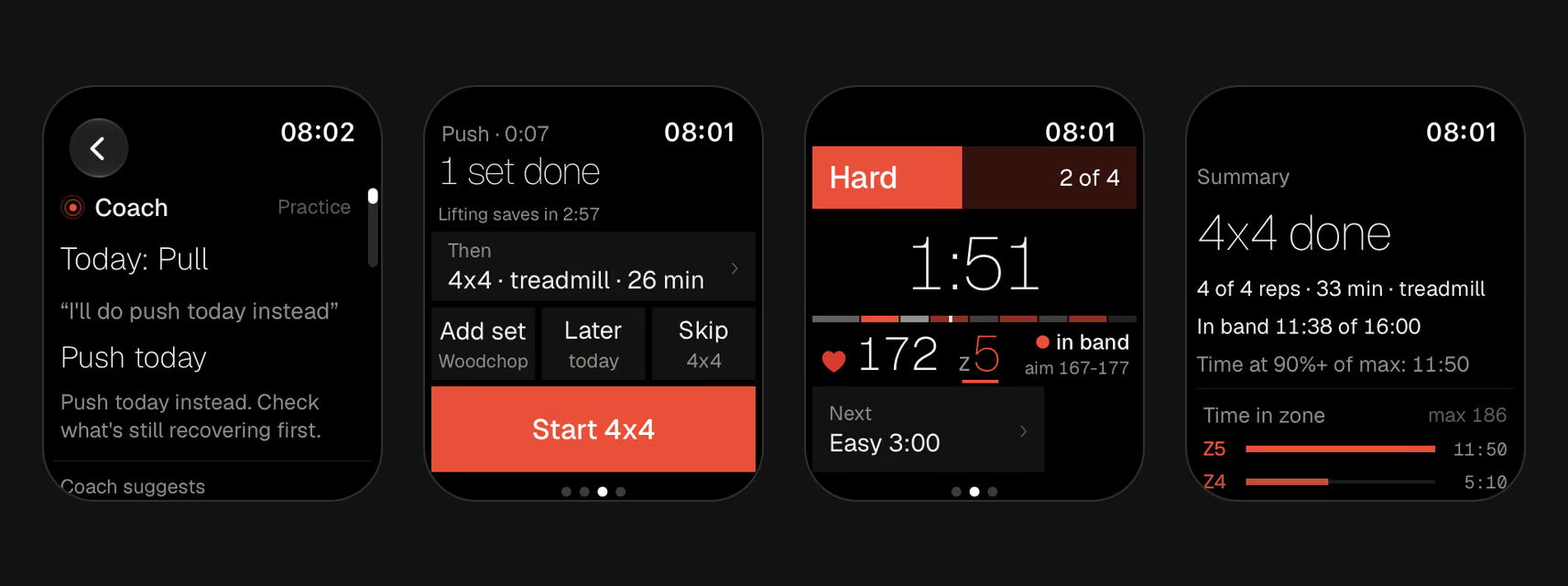
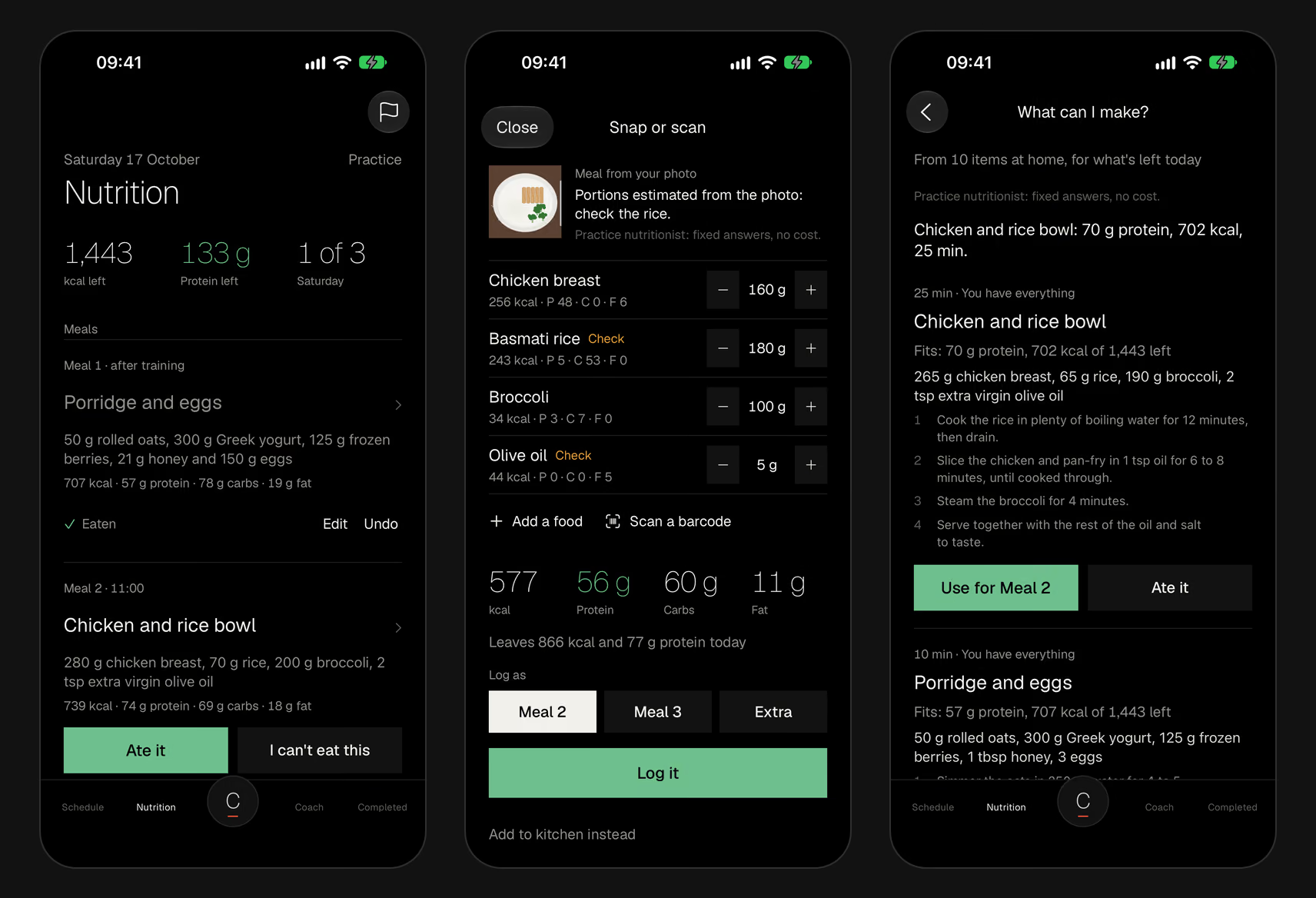
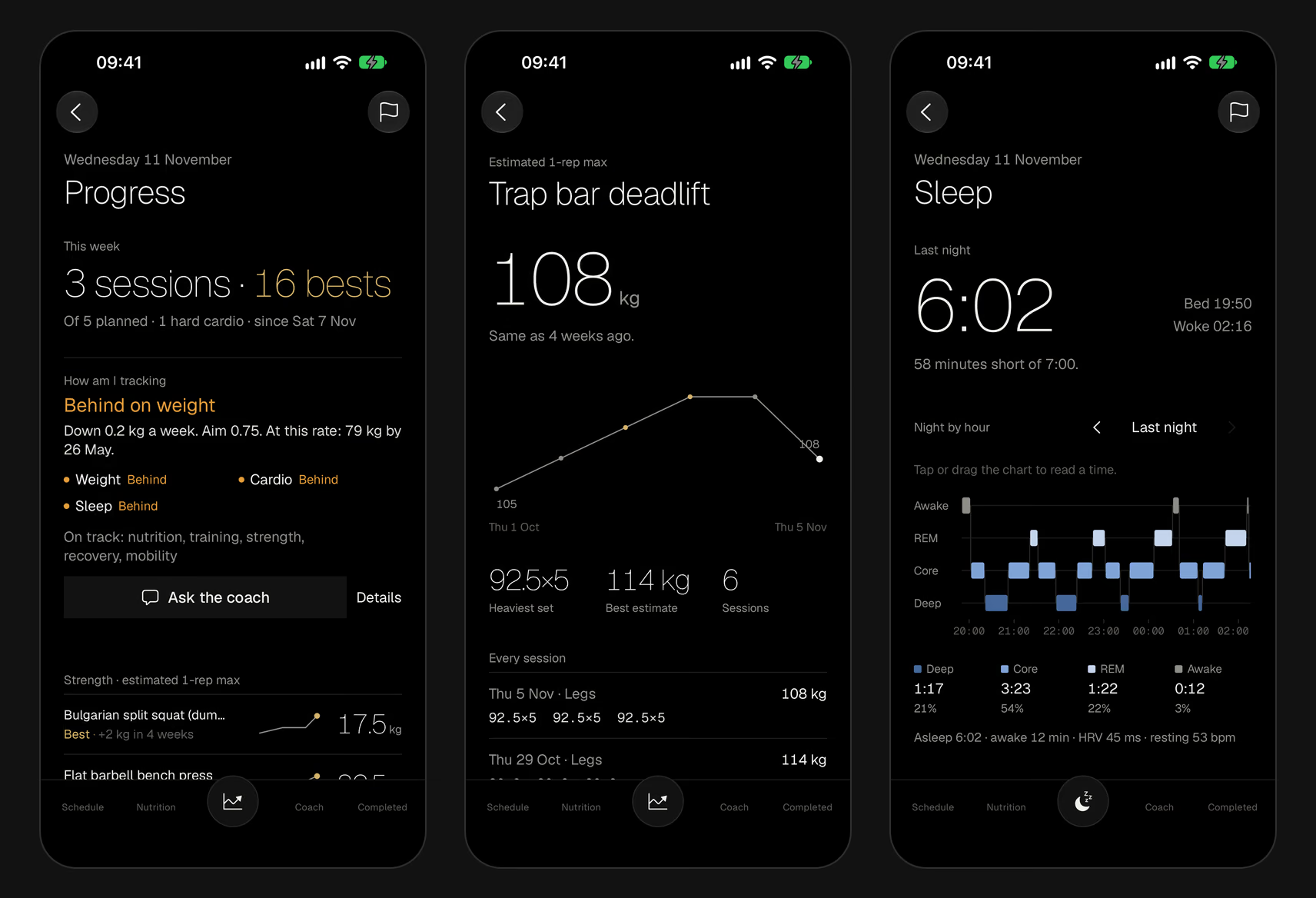
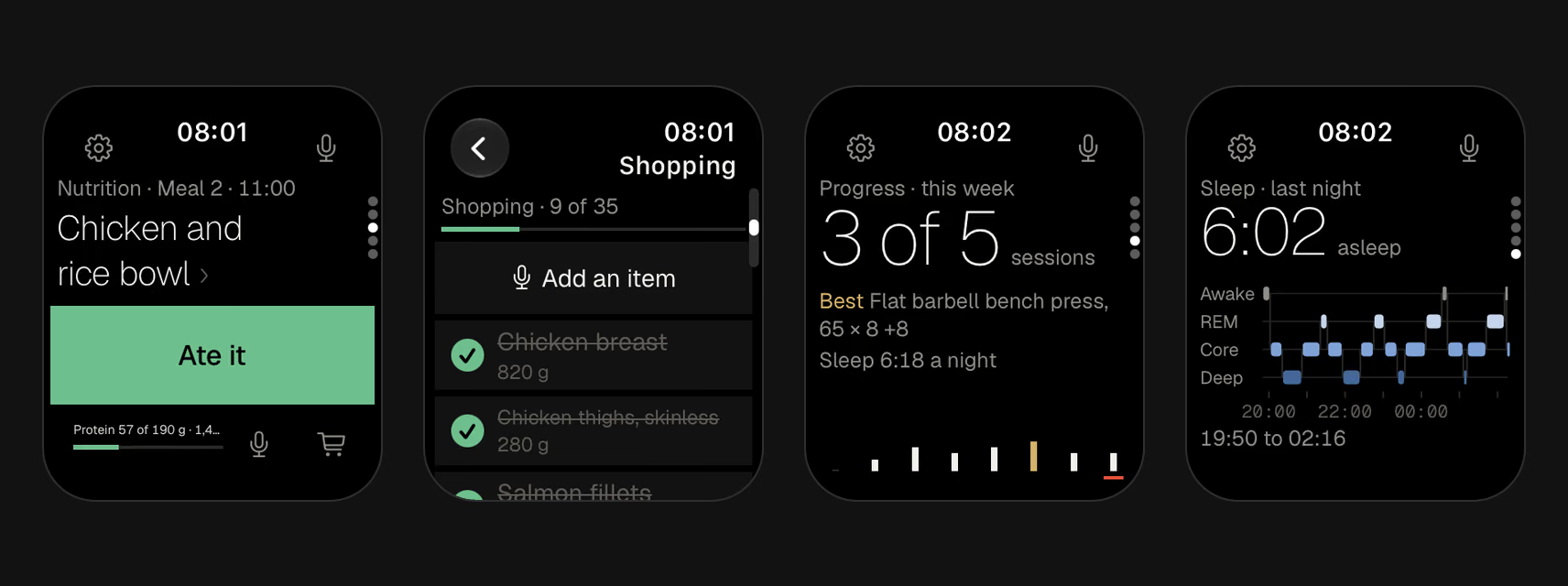
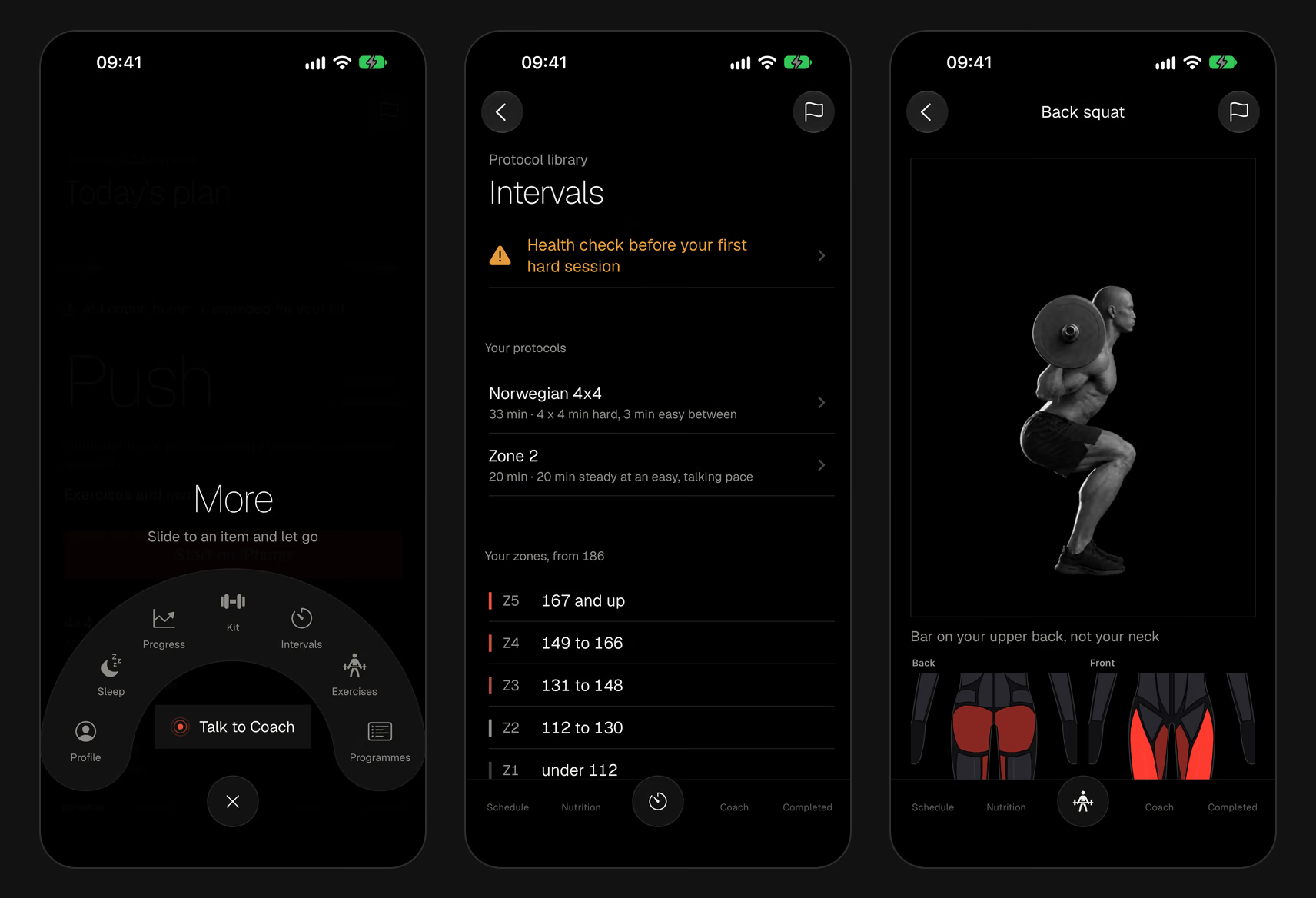
That month produced a full product, not a demo. Coach plans training as a rolling cycle instead of fixed weekdays, and rebuilds each session for the kit in today's place: a commercial gym, a home set-up, a hotel or no kit at all. It never swaps in a riskier movement. It logs workouts on the Watch or the iPhone, with one live session across both, runs heart-rate interval sessions with spoken cues, and holds a library of 385 exercises, each with a demonstration and a muscle map. An AI nutritionist plans meals and changes them when asked ("I'm not cooking eggs at 4am, what else?"), reads a photo of a plate into foods and portions, and keeps the shopping list. Sleep, heart-rate variability and weight come from Apple Health. Everything works offline, and every feature works without a Watch.
The same bar applied to the content. Every exercise demonstration is checked by a separate reviewer agent before a person sees it, and many AI-generated clips failed: a curl that came out as a hammer curl, a Romanian deadlift with the wrong form. Only clips that pass are in the app.
Coach is a private app today, used by its founder every morning. Enrolment with Apple as an organisation is under way, for TestFlight and then the App Store.
automated tests, about: nothing reaches his iPhone or Watch without passing them
First commit
10 OctFirst real session, at 3am
14 OctUnit tests, run on a Mac in seconds
1,120Interface tests on the iPhone and Watch simulators
220Server gateway tests
190Figures are from the project repository and build notes as at 11 November 2026, and each count is approximate. Every screen shown on this page is demo data from the iOS and watchOS simulators.
The deeper outcomes
Behind the headline metric.
- Written and tested by AI coding agents, directed in plain English: the founder never wrote code
- About 1,530 automated tests, including 220 that drive the iPhone and the Watch in the simulator
- The AI proposes and the app decides: every change the coach suggests is checked against the app's own safety rules
- One live workout across two devices, and every feature works without a Watch
- Sessions rebuilt for the kit in today's place, never with a riskier movement
- Every exercise demonstration reviewed for form by a separate agent before it ships
- A typical turn of conversation with the coach costs one to three US cents
- Readable at 3am: 4.5:1 contrast and tap targets of 44 to 56 points
In the work
What's next
Enrolment with Apple comes first, then TestFlight for a second user and possibly an App Store release. In the product, a sleep coach is next: coaching bedtime, not only reporting on the night. More video demonstrations for home and travel training are in production. The method is the part that carries over to client work: plain-English direction, agents that build in parallel, and verification at every step.
Related
Other engagements that ship the same kind of outcome.
Start
Want this kind of outcome for your business?
Tell us what you're trying to grow, then choose how to continue: a 30-minute call with Michael Wilkins, our founder, or a conversation with our AI strategist that ends with a written scope. No obligation either way.