Case studiesTraffic management
MLA Traffic
A Squarespace template with no service pages, rebuilt into a site that has brought in 72 enquiries and 58 job applications since it launched in June 2026.
Outcome
Enquiries· Since launch in June 2026
Client
Industry
Region
Engagement length
Services touched
- Web
- Search
01The challenge
A template that hid everything they do — and an ad account paying for it.
MLA Traffic run traffic management and traffic control across Melbourne and regional Victoria — civil projects, utility work, events, council contracts. It is compliance-gated work: they hold VicRoads pre-qualification for Traffic Management Design and Implementation, Categories 1 and 2, the accreditation principal contractors check before they engage anyone.
The site was a Squarespace template. Their services were not broken out into separate pages, and neither were the locations they cover. Everything lived on a handful of general pages — so a search for ‘traffic management plans Melbourne’ or ‘traffic control Epping’ had nothing specific to match. The company had the credentials, the accreditation and the fleet, and none of it was findable.
Our audit of the existing Google Ads account scored it 35 out of 100, with roughly a third of spend going to traffic that could never convert. Competitor brand keywords carried quality scores of 1 and 2 — the lowest Google issues — and produced nothing. A Performance Max campaign turned 174,000 impressions into a single conversion. And a meaningful slice of budget was being spent on people searching for traffic controller courses and traffic control jobs.
The two problems were the same problem. Every ad pointed at the homepage, because there were no service pages to point them at. Paid traffic was arriving at a page that could not answer the question that brought it.
VicRoads pre-qualification held
The credential a principal contractor looks for — and the site never led with it
02The approach
A page per service, a page per place, and the credential first.
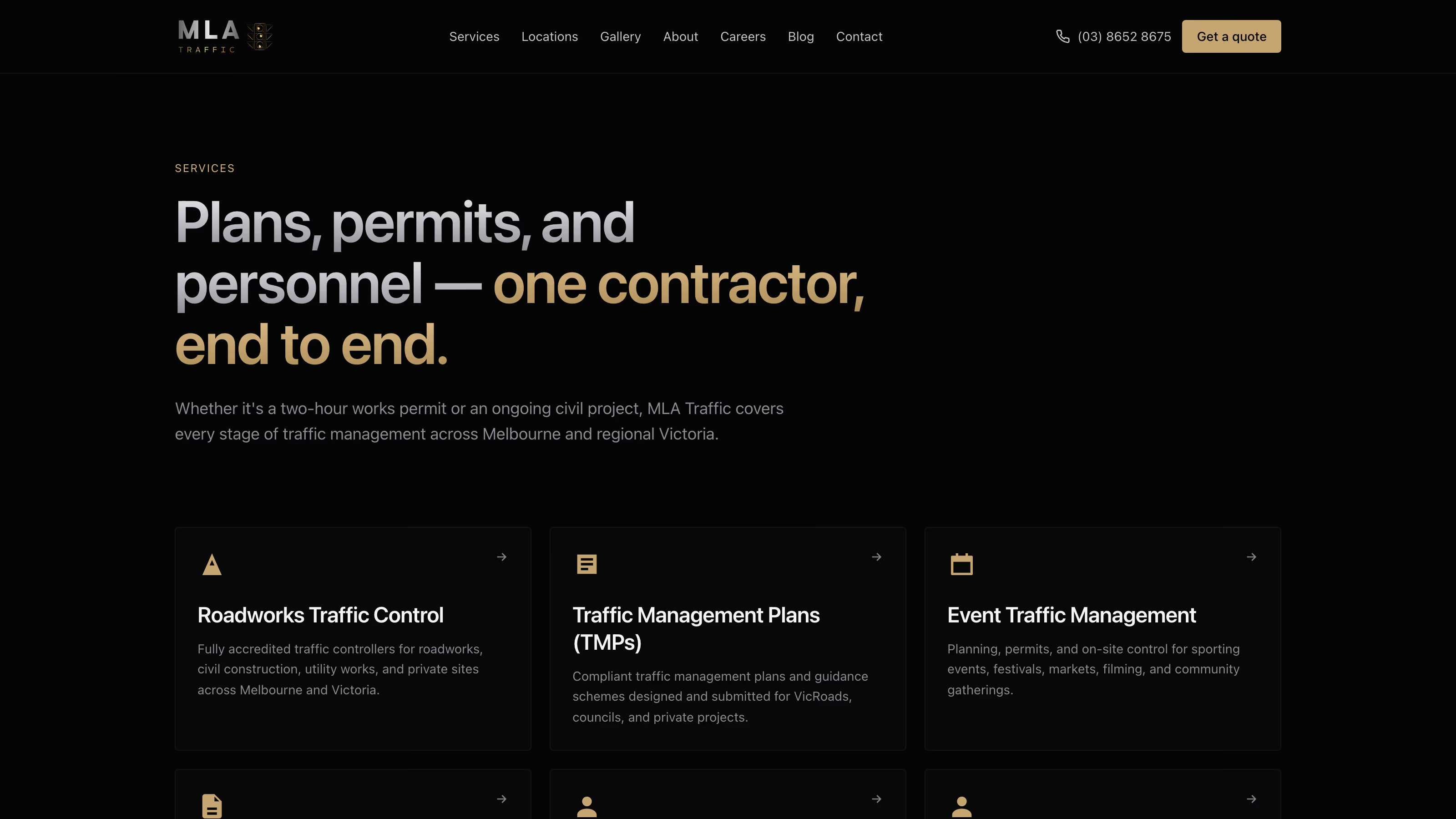
The rebuild gave every service its own page and every area its own page, so each thing MLA do — and each place they do it — has somewhere specific to rank and somewhere specific to land.
The positioning leads with compliance rather than with cones. The homepage headline is ‘Traffic management, engineered for compliance’, and the credentials sit above the fold: VicRoads pre-qualified TMD and TMI Categories 1 and 2, AS 1742.3 and Austroads AGTTM, 24/7 with under two-hour metro mobilisation.
That ordering is deliberate. Councils, civil contractors and utilities are not buying traffic cones; they are buying the confidence that the paperwork survives an audit and the crew turns up accredited. The meta description leads with the pre-qualification for the same reason.
The build is Astro, statically generated and served from Vercel's edge — a 53KB homepage that answers in around 200 milliseconds. Paid traffic now lands on the page matching the search that produced it, rather than on a homepage doing the work of twenty.

03The result
Seventy-two enquiries, and enough applicants to staff them.
Since it launched in June 2026, the site has brought in 72 enquiries, 19 of them in the first six weeks.
It has also brought in 58 job applications, 18 of them in those first six weeks — which for a traffic management company is not a side effect, it is the constraint. Winning work you cannot crew is worse than not winning it. A careers page that ranks is a growth lever in a trade where the limit is accredited people, not demand.
There is a neat symmetry in that. The old ad account was quietly paying for people searching ‘traffic controller course’ and ‘traffic control job’ — treated, correctly, as wasted spend, because an ad for commercial traffic management cannot convert a job seeker. Give that same intent a careers page of its own and it stops being waste and starts being the thing that lets you say yes to the next contract.
The difference throughout is structural rather than cosmetic. A template with no service pages and no location pages gives Google nothing specific to rank, and gives paid traffic nowhere specific to land. A page per service and a page per area gives both something for every way the question gets asked.
The deeper outcomes
Behind the headline metric.
- 72 enquiries since launch in June 2026, 19 of them in the first six weeks
- 58 job applications, 18 in the first six weeks — the crewing constraint, not just the demand side
- A page per service and a page per location, against a template with neither
- Inherited Google Ads account audited at 35/100, with ~32% of spend reaching traffic that could not convert
- Every ad had pointed at the homepage — there were no service pages to send them to
- VicRoads pre-qualification surfaced above the fold rather than buried
- 53KB homepage on Astro, edge-cached, ~200ms time to first byte
What's next
Rank tracking across the service and location set is the next measurement step — the leads are counted, the per-query positions are not yet, and the two together are what show which pages are doing the work. The location coverage also has room to extend further into regional Victoria as crewing allows.
Related
Other engagements that ship the same kind of outcome.
Start
Want this kind of outcome for your business?
The strategist below picks up the same lens we used for MLA Traffic. Tell them what you're trying to grow. By the end of the conversation you'll have a plan, a quote, and a senior strategist on the line.