InsightsPaid Media
Regulated Ad Accounts Carry Structural Waste Before Anyone Writes an Ad
Financial services categories are searched by people who will never open an account. What that costs, and the three audited programmes that moved once the measured event moved down the funnel.
19 September 20264 min readReviewed by Michael Wilkins
Direct answer
Financial services Google Ads accounts usually carry substantial structural waste before anyone touches the creative, because the category's terms are searched by rate shoppers, students, researchers and job seekers as well as by prospective customers, and broad match cannot separate them. The correct measure is cost per funded customer rather than cost per application, since a submitted application that fails credit or compliance is not revenue. Rebuilding one mutual bank's search programme cut Google Ads costs by 91% and delivered a credit card cost per acquisition 777% below the industry benchmark; on a securities client, tightening match types and offers took cost per lead to A$20 against a A$50 target. Optimise to the funded stage, set the ceiling from margin over the holding period, and plan for the sales capacity the volume will need.
The waste is there before the creative is
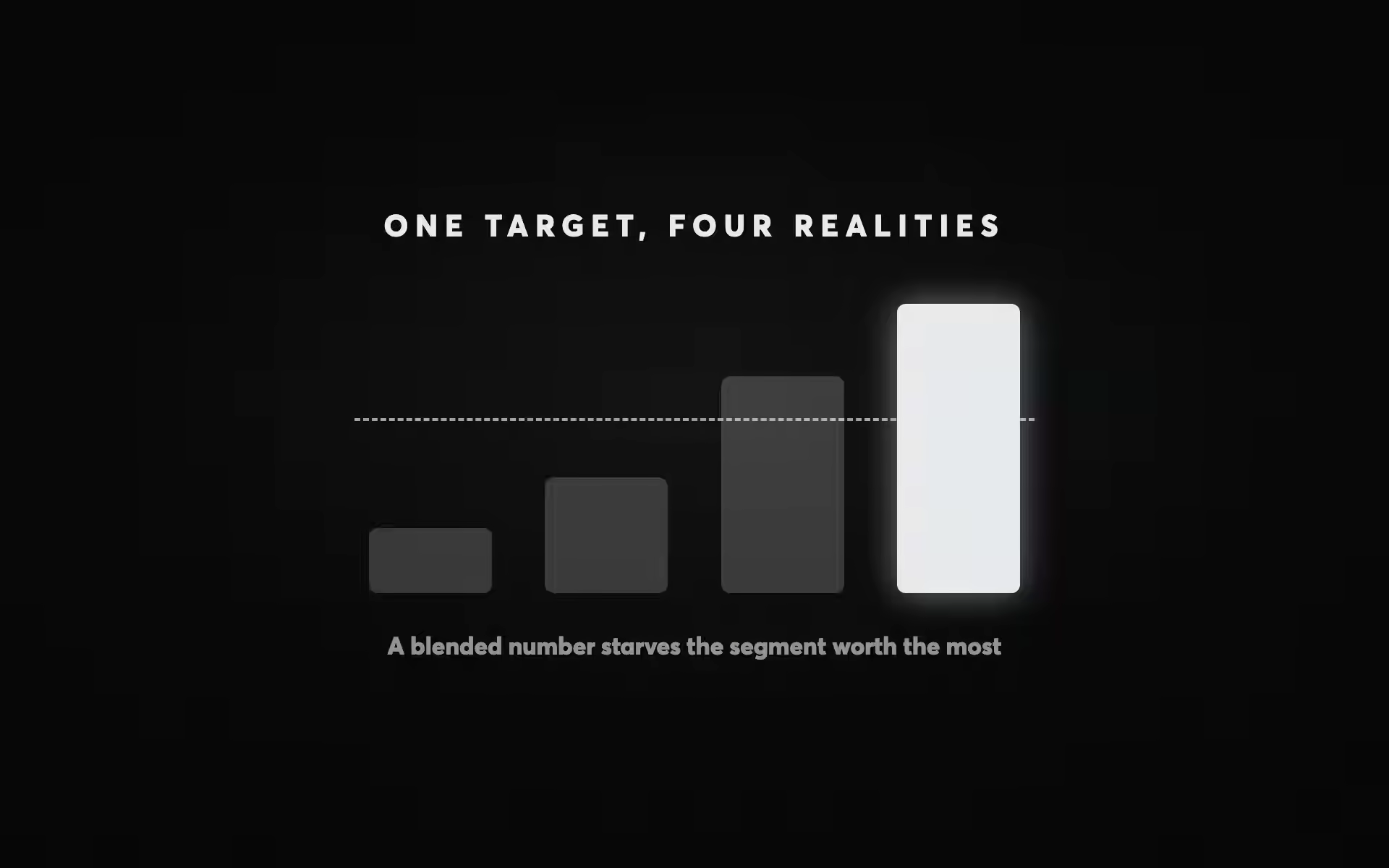
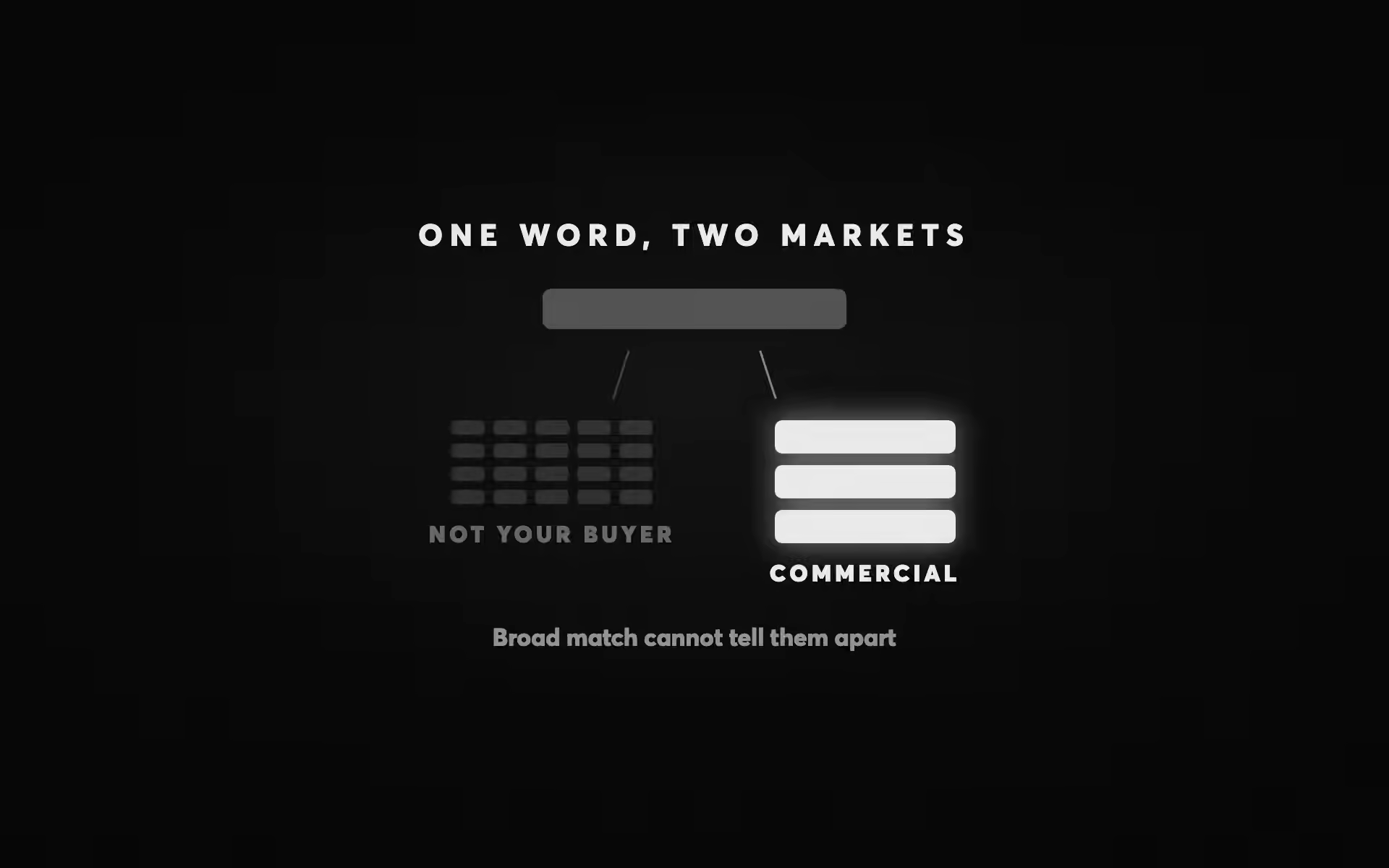
Regulated categories have a particular problem: they are interesting. People search “term deposit rates”, “how does a novated lease work” or “best home loan” for reasons that have nothing to do with opening an account this quarter — coursework, curiosity, comparison journalism, a dinner-table argument.
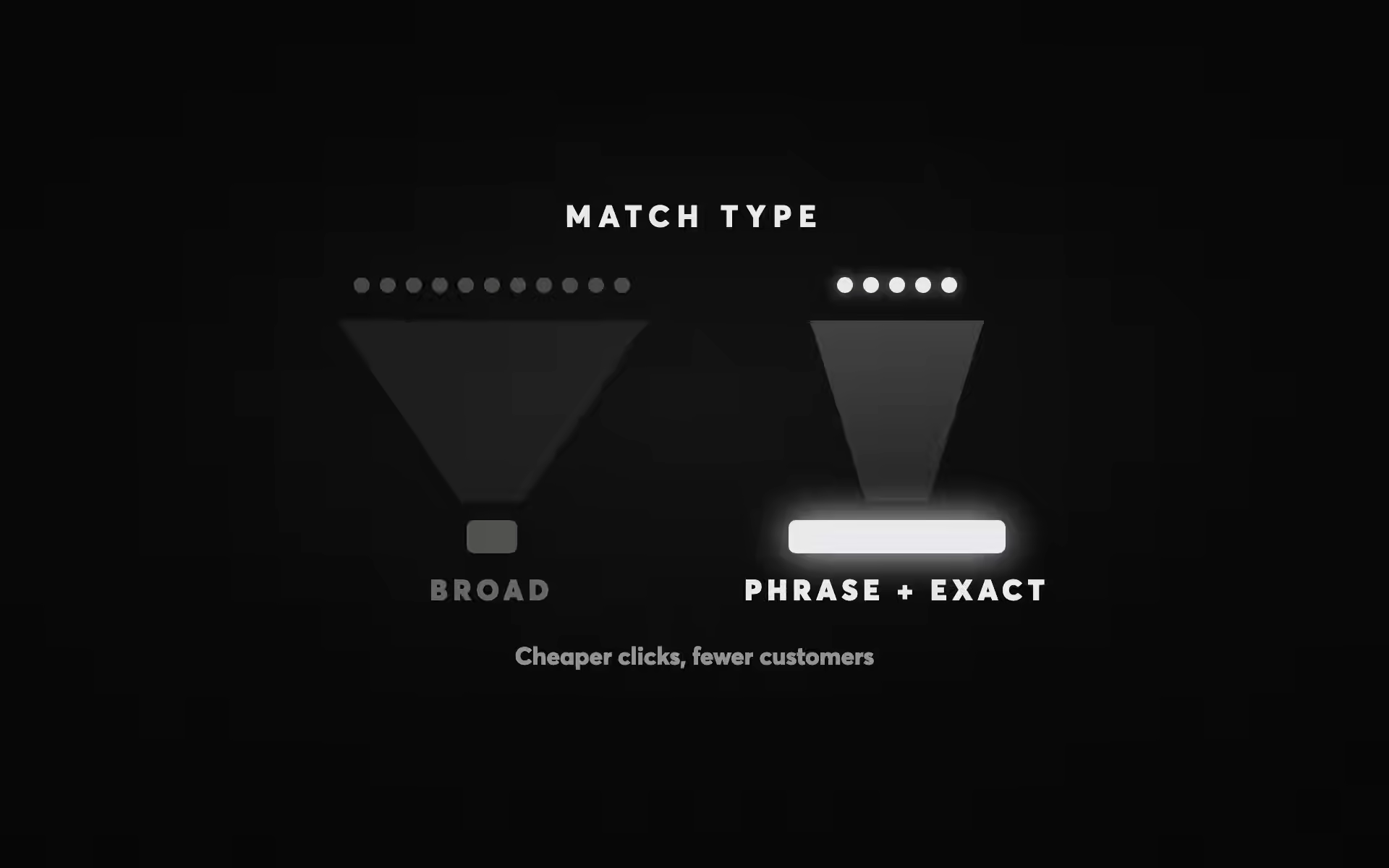
Broad match buys all of it, cheaply, and it converts on a rate-comparison page at a flattering rate.
| Broad match | Phrase + exact | |
|---|---|---|
| Clicks | 700 | 230 |
| CPC | A$9 | A$27 |
| Spend | A$6,300 | A$6,210 |
| Landing page conversion | 2.2% | 6% |
| Enquiries | 15 | 14 |
| Genuinely qualified | 14% | 55% |
| Real sales conversations | 2 | 8 |
| Cost per real conversation | A$3,150 | A$776 |
Illustrative model, not a benchmark — the shape of the arithmetic, not the figures. Run it on your own CPCs, landing page conversion rate and qualification rate.
Who is in the auction with your customer
- Rate shoppers with no intention of switching. Checking whether their current rate is competitive, then staying put.
- Students and researchers. Financial products are coursework. “How does X work” is almost never a buyer.
- Existing customers. Searching your own product names to log in or find a form, and clicking an acquisition ad to do it.
- Job seekers. Banking and broking category terms overlap heavily with career terms.
- Comparison-site traffic arriving with an expectation your direct channel is not set up to meet.
None of these are bad-faith traffic. They are simply people whose search looks exactly like a customer's and whose outcome never will.
Measure the funded customer, not the application
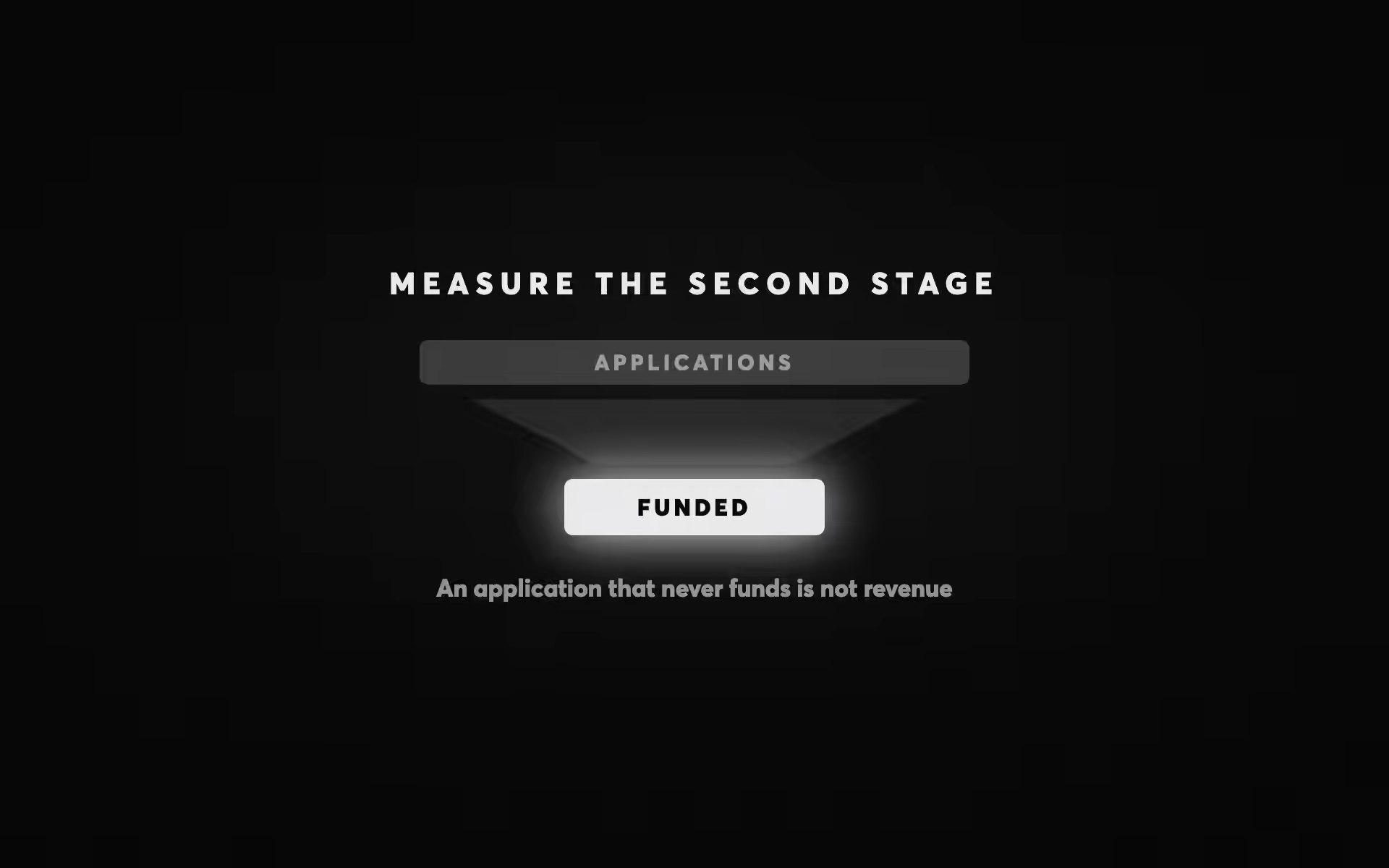
The single most expensive gap in financial services accounts is optimising to the wrong event. An application that fails credit or compliance costs you the acquisition and returns nothing, and a platform told to maximise applications will find you more of exactly those.
Rakuten Securities shows the size of the shift when the measured event moves down the funnel: cost per sign-up fell 80%, 60% of sign-ups converted through to funded accounts, and funded accounts delivered at 5× forecast. Sign-ups are the cheap number. Funded accounts are the business.
Practical minimum: capture the click identifier on the first visit, carry it into the origination system, and send the funded event back as an offline conversion with a value attached, so bidding weights a high-contribution product above a low one.
What the waste looks like once it is removed
Rebuilding a mutual bank's search programme cut Google Ads costs by 91% while delivering a credit card cost per acquisition 777% below the industry benchmark — a scale of reduction that is only possible when the starting account was paying for traffic it could never convert. The same programme's term deposit work returned 5,090% on a single six-week flight, modelled as A$5.7M of multi-year net interest margin from the balances acquired.
That last figure is the important one for setting a ceiling. The return on a deposit campaign is not the balance acquired; it is the margin on that balance over the years you hold it. Model that first and the allowable acquisition cost falls out of it.
Capacity is part of the funnel
On JB Markets — securities and derivatives, serving wholesale and retail traders — the brief was a A$50 cost per lead on new trader sign-ups. After the first week leads were arriving at A$40. As A/B testing accumulated data, cost per lead fell to A$20, 60% below target.
Then the campaign had to be paused, because the internal sales team could not service the volume it was generating. The pause held until the client streamlined their processes to absorb it.
That is worth planning for rather than discovering. A campaign that outruns the people who have to call the leads does damage a slower one would not: unworked leads age, and an aged lead in financial services is a lost one.
Compliance is a media constraint, not a legal afterthought
- Platform verification. Google requires advertisers promoting financial services in Australia to complete financial services verification tied to licence details. Budget lead time — it stalls launches more often than creative approval does.
- ASIC Regulatory Guide 234 sets good-practice expectations for advertising financial products: balanced messaging, no burying qualifications in fine print, warnings legible on a phone.
- Misleading and deceptive conduct provisions apply to every ad you have ever run, retail or wholesale, regardless of which distribution regime the product sits in.
Practical translation: “cheapest cover in Australia” is a compliance problem. A specific, defensible claim about a specific product is not — and it tends to convert better anyway, because specificity beats superlatives with a buyer comparing rates.
Do this on your account
- Model the margin, not the balance. Contribution per customer, times the holding period, is what sets your ceiling.
- Move the measured event to funded, and attach a value so bidding can tell a high-contribution product from a low one.
- Phrase and exact, with rate-shopper and study intent negatived out, rebuilt monthly from the search terms report.
- Check sales capacity before you scale, not after the leads stop being answered.
The match-type arithmetic behind this is in broad match is the most expensive cheap traffic you can buy.
Questions