InsightsPaid Media
The Word “Insurance” Is Costing Brokers a Third of Their Budget
“Insurance” is the most ambiguous word a commercial broker can bid on. Where the budget actually goes, and the split between what you can earn and what you have to buy.
19 September 20265 min readReviewed by Michael Wilkins
Direct answer
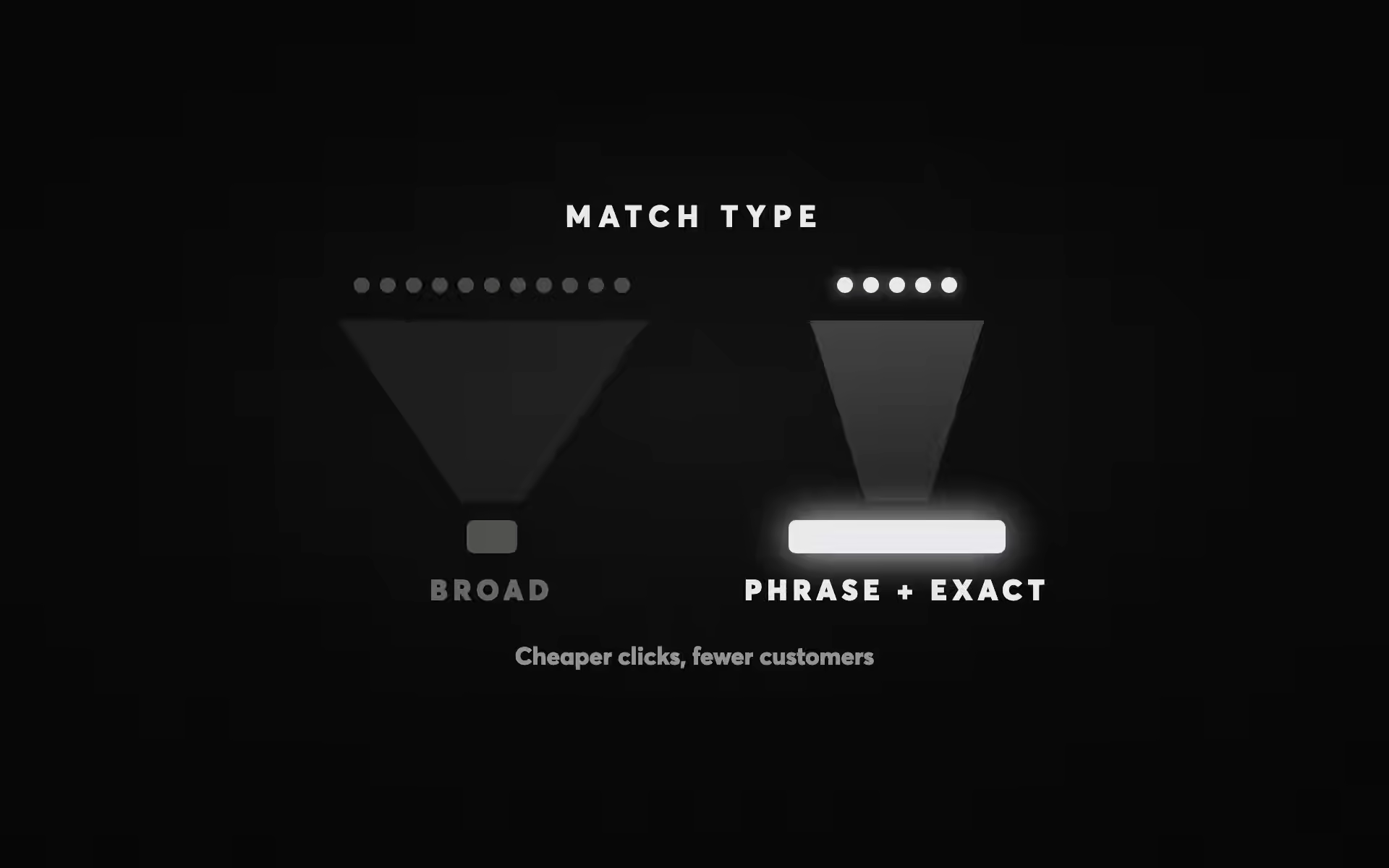
Most wasted spend in an insurance broker's Google Ads account comes from a single ambiguity: “insurance” and every phrase containing it are used by personal-lines shoppers, claimants, students and job seekers as well as by the commercial buyers a broker wants. Broad match cannot tell those apart, so it buys all of them. Phrase and exact match on class-of-risk terms — professional indemnity for engineers, contract works, mining rehabilitation bonds — cost several times more per click and convert at a far higher rate into enquiries a broker can act on. Involve Digital runs broker acquisition on phrase and exact by default, with negatives rebuilt monthly, and reserves organic for the narrow specialist terms a broker can realistically own.
One word, four markets
Commercial broking has a problem most verticals do not: its central keyword is used by people who could never be clients.
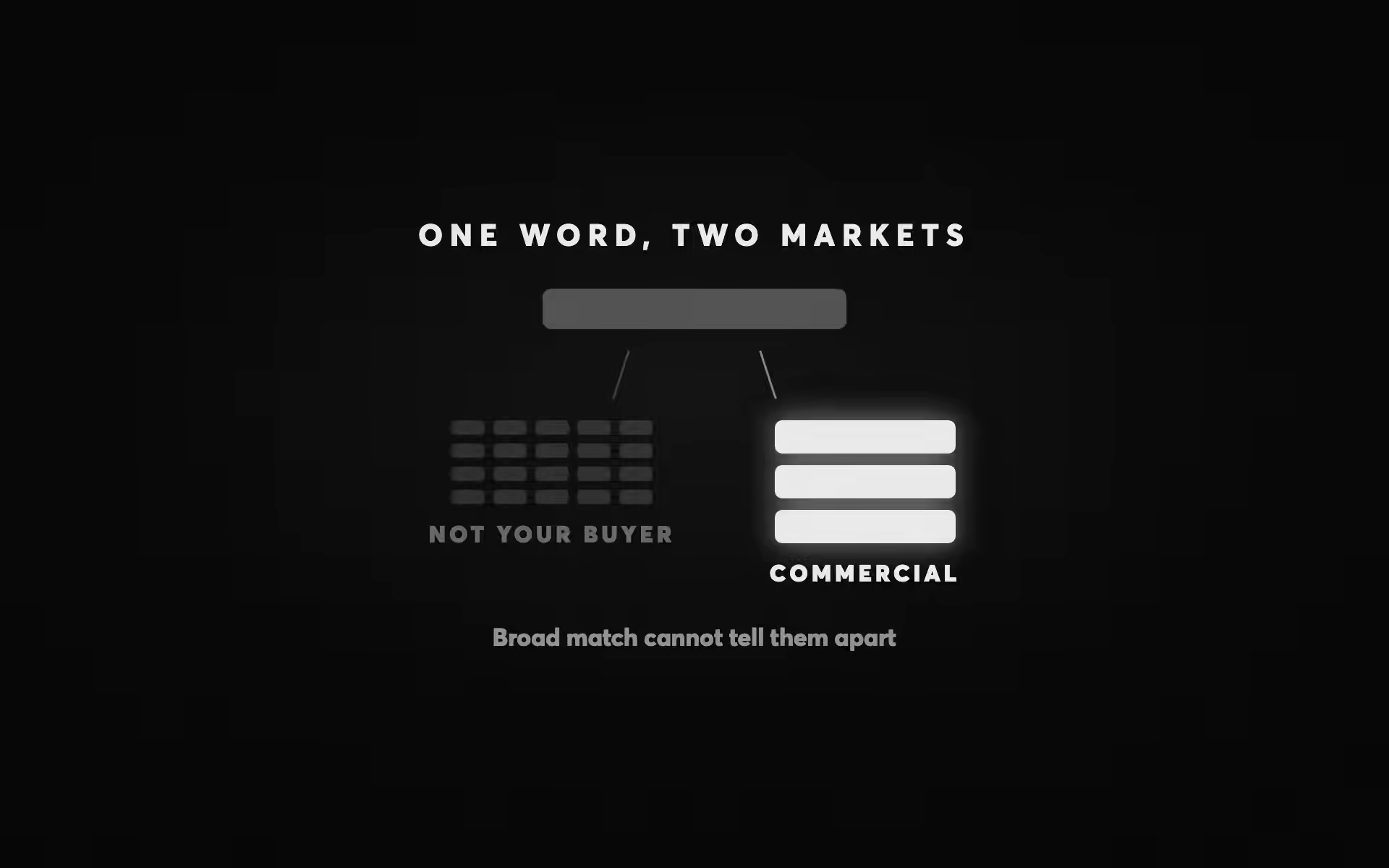
Type “insurance” and you are standing in a queue with someone renewing a car policy, someone chasing a claim, someone studying for a broking qualification and someone looking for a job at a brokerage. A commercial broker placing programmes for contractors turning over $20M is in that same auction, paying the same prices, and converting almost none of it.
Broad match cannot separate them, because the separation is not in the words. It is in who is typing.
What that costs on a like-for-like budget
| Broad match | Phrase + exact | |
|---|---|---|
| Clicks | 400 | 150 |
| CPC | A$15 | A$38 |
| Spend | A$6,000 | A$5,700 |
| Landing page conversion | 2.5% | 7% |
| Enquiries | 10 | 10 |
| Genuinely qualified | 20% | 60% |
| Real sales conversations | 2 | 6 |
| Cost per real conversation | A$3,000 | A$950 |
Illustrative model, not a benchmark — the shape of the arithmetic, not the figures. Run it on your own CPCs, landing page conversion rate and qualification rate.
Commercial lines punish broad match harder than any vertical we run, and the reason is the qualification column rather than the click price. The traffic is not fake. It is real people with a real insurance question that a commercial broker cannot answer.
Where a broker's wasted spend actually goes
Sorted by what the searcher wanted, the leakage in broker accounts is consistent:
- Personal lines. Car, home, travel, pet. Enormous volume, zero commercial relevance, and the cheapest clicks in the account — which is exactly why they survive a cost-per-click review.
- Claims. Someone with a claim in progress is searching your category with real urgency and no intention of changing broker.
- Study and careers. Broking qualifications, Tier 1 compliance, “insurance jobs”. High volume, and it looks like category interest in a report.
- Definition searches. “What is professional indemnity” is a student, a curious business owner or a competitor's marketing team. It is not a brief.
- Comparison and aggregator intent. People looking to buy direct, online, today — the opposite of a broked placement.
Every one of those is cheap. Together they are why a broker account can show a falling cost per click and a falling number of real conversations at the same time.
What to bid on instead
The terms worth paying commercial-lines prices for share a shape: they name a class of risk, or they name a trigger.
- Class of risk. Professional indemnity for engineers. Contract works. Management liability. Mining rehabilitation bonds. Specific enough that only a commercial buyer types them.
- Trigger events. A tender demanding a certificate of currency. A new contract requiring $20M public liability. A renewal that has gone wrong. These are the searches that precede a call.
- Qualified brand. Your firm's name, capped. And if a product or facility name is also an ordinary English phrase, pair it with the firm name — that is a whole problem of its own, covered in why your brand keywords cost 14× more than they should.
Then send each one to a page about that class of risk. An ad for mining rehabilitation bonds landing on a general commercial insurance page has already lost the enquiry.
What a broker can earn rather than buy
Specialist broking is one of the few categories where organic can genuinely beat paid, because the winning pages are narrow enough that nobody else has written them.
BCS Broking place commercial insurance and surety bond facilities for Australian construction and mining companies. Their website had not produced a single decent lead in eleven years — fifteen pages, a homepage last published in 2016, policy pages with no meta description at all. Rebuilt around the structure of the market rather than the business — nineteen insurance verticals and eleven surety bond types, each with its own page — it produced ten enquiries in the first month. Three months after relaunch they held the first organic result for their money search, and Google's AI Overview named them among “prominent firms including Aon, Coverforce, and BCS Broking”, citing two of their own insights articles as sources.
Worth reading that honestly: most of those first ten enquiries sat under the minimum deal size BCS can take. A business placing programmes for $20M-plus contractors does not need ten enquiries a month, it needs the right ones. The site started producing inbound at all, and the next problem became qualifying it.
So the split for a broker is unusually clean:
- Narrow class-of-risk pages: earn them. The competition is thin and the intent is unambiguous. This is the cheapest durable pipeline a specialist broker can own.
- Broad category terms: buy them, or skip them. “Business insurance” is owned by aggregators and direct insurers with budgets you will not match organically.
- Personal lines: neither. If you do not place it, do not appear for it.
What happens when it is run properly
Our longest-running broker engagement is with a general insurance broker network, where the brief was to increase ‘Find a Broker’ enquiries from the website against what the previous agency had delivered, on an equivalent media budget. Within three months broker leads ran at 5× the prior agency's. Year 1 closed at 6×. By Year 5 the lift had compounded to 9.7×.
Nothing in the media market changed over those years to make broker enquiries nine times cheaper. What changed was targeting discipline and measurement, compounding on itself as each year's conversion data made the next year's targeting sharper. That compounding only happens if the enquiry-to-bound data is captured from the start.
Do this on your account
- Pull the search terms report for 90 days and label every term by who typed it: commercial buyer, personal lines, claimant, student, job seeker. The proportions will decide your next month's budget.
- Move everything to phrase and exact, then rebuild the negative list from that labelling exercise.
- Split campaigns by class of risk, not by “brand” and “generic”. Each class has its own economics and deserves its own ceiling.
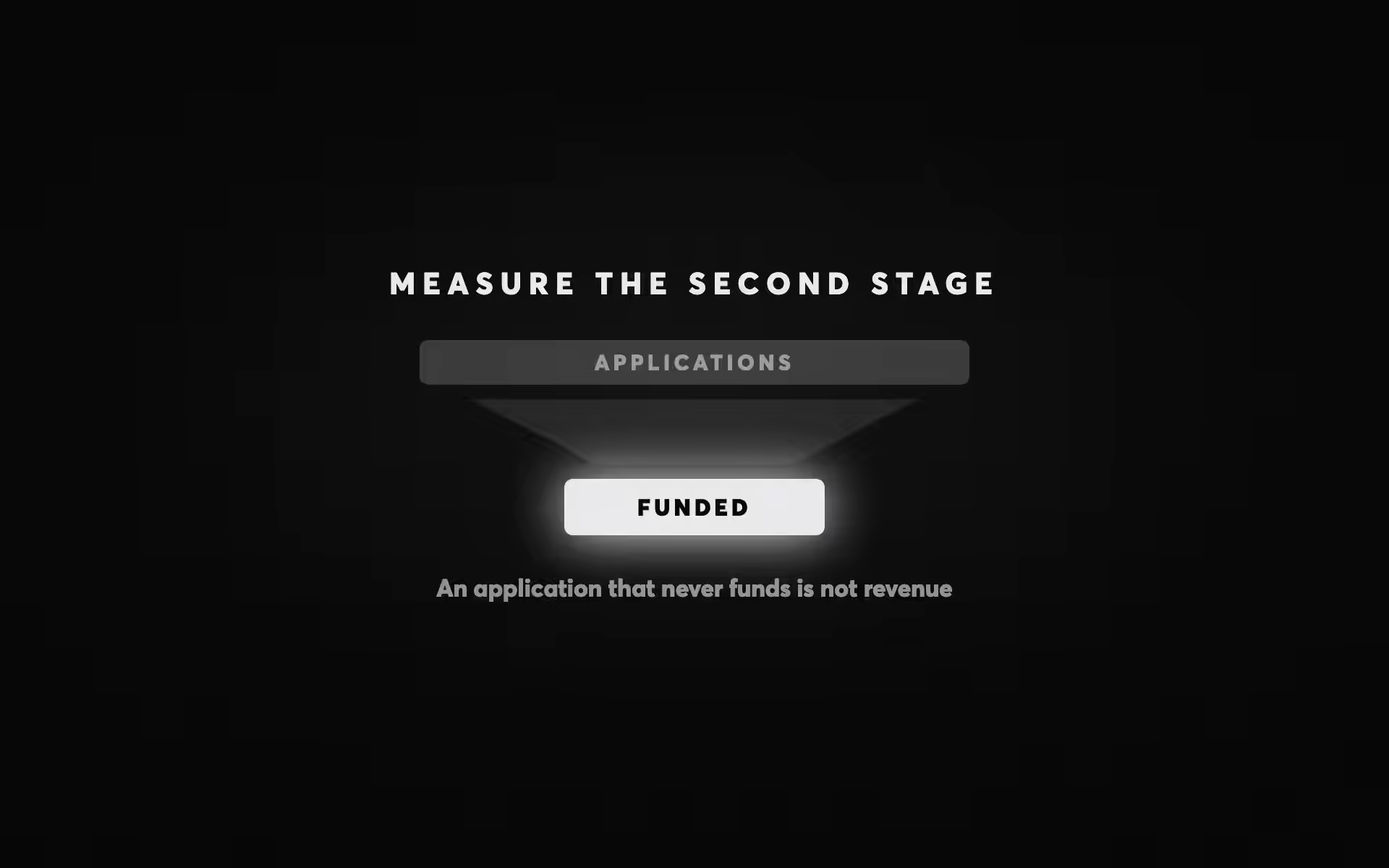
- Count enquiries at or above your minimum deal size, not enquiries. If that ratio is low the fix is upstream, in the keywords and the pages.
The match-type arithmetic behind all of this — why the cheaper click usually costs more — is in broad match is the most expensive cheap traffic you can buy.
Questions