InsightsPaid Media
Why Your Brand Keywords Cost 14× More Than They Should
A teardown of one Australian B2B search account, and the diagnostic hiding in plain sight: what your cost per click tells you about which words you actually own.
19 September 20267 min readReviewed by Michael Wilkins
Direct answer
Bidding on your own brand is usually worth a small, capped budget, because brand terms are cheap and convert well — but a product name is only a brand term if the search results agree. Cost per click is the test: a term you genuinely own is priced at near the floor, because nobody is bidding against you and Google is confident your page is the answer. In one Australian B2B software account, the company name cost 90 cents a click and produced enquiries at $74 each, while a product name that is also a common English word cost $12.55 and produced none. Adding the company name to that product term cut the cost per click 80% and took it from zero enquiries to six. Across the account, 63% of budget went on bare product names the company did not own and could not rank for.
Two keywords, fourteen times the price
In an Australian B2B software account we audited recently, two keywords stood out.
The first was the company's own name. It cost 90 cents a click, pulled 736 clicks in 90 days, and produced nine sales enquiries at $74 each — the cheapest, best-performing line in the account.
The second was the name of one of their products. It cost $12.55 a click. It produced 59 clicks, and zero enquiries.
Same company. Same account. Same 90 days. Fourteen times the price.
Most people's first instinct is that the second keyword is badly managed — bad quality score, bad landing page, bad ad. It was none of those. The gap between those two numbers is the single most useful piece of information in the whole account, and almost nobody reads it.
What a cheap click actually tells you
You cannot buy a 90-cent click on a term anyone else wants.
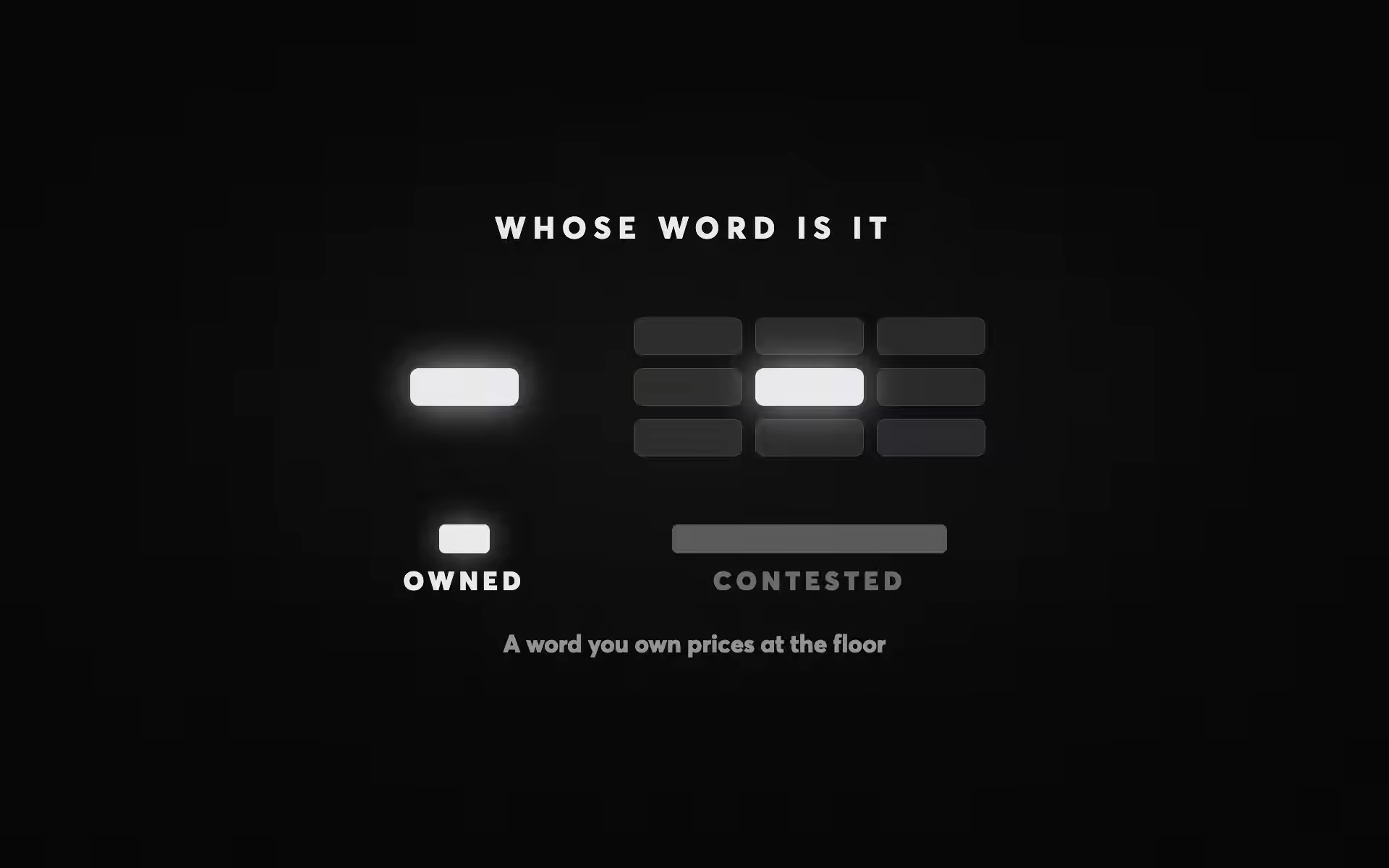
Google prices a click on a blend of what competitors are willing to pay and how relevant it believes you are. When a keyword costs you almost nothing, it is telling you two things at once: nobody is bidding against you, and Google is completely confident your page is the right answer. You own that search result.
That works in reverse. When a keyword with your own product name in it costs $12.55, something is badly wrong with the assumption that you own it.
This is why cost per click is worth reading as a diagnostic rather than a cost. It is the market's opinion of whether the word is yours — priced, live, and updated continuously. There is no research tool that answers the ownership question more honestly than your own CPC column.
The test takes ten seconds
Search the bare product name, in an incognito window, and look at what comes back.
We did this for three of their products. One shares its name with a mattress brand, a text editor and a species of snail. One shares its name with a stock-market term and a casino. One is a common adjective half their sector uses.
The company did not appear on page one for any of them — organically or otherwise. It never will. Those words do not belong to them; they simply happen to use them as product names.
So the $12.55 was not the price of defending a brand. It was the price of entering an auction full of advertisers selling mattresses, and losing.
There are only three outcomes to that test, and each has one correct response:
- Page one is all you. You own it. Bid a token amount to hold the top slot against conquesting, cap it hard, and spend the rest elsewhere.
- Page one is a mix. The word is contested but winnable. Qualify it — see the next section — and build the organic page that settles it.
- Page one is entirely other people. The word is not yours. No budget will change that, because you are not being outbid, you are being out-meant. Stop.
The fix was already sitting in the account
The same account ran a second version of that keyword — the product name with the company name attached. Two extra words. Same product, same landing page, same ads.
| Cost per click | Enquiries | |
|---|---|---|
| Product name alone (132 clicks) | $10.58 | 0 |
| Product name + company name (114 clicks) | $2.10 | 6.5 |
80% cheaper. Zero became six.
Adding two words turned an ambiguous query into an unambiguous one. Google stopped showing the ad to people shopping for mattresses and started showing it to people looking for that company's software. Quality score went up, price came down, and the traffic converted.
Both versions had been running side by side for over a year. Nobody had compared them.
That is the cheapest fix in paid search and almost nobody runs it, because it requires looking at two rows of the same account next to each other and asking why they disagree.
What it hides at account level
Sorted by which terms are genuinely owned and which are contested words, the picture changes completely:
| Share of keyword spend | |
|---|---|
| The company's actual name | 6% |
| Product name + company name | 12% |
| Bare product names (generic English words) | 63% |
| Category terms — what a buyer types | 19% |
Eighty-one per cent of the budget went on their own names. And the largest slice by far — nearly two-thirds — went on words they do not own, cannot own, and were never going to rank for.
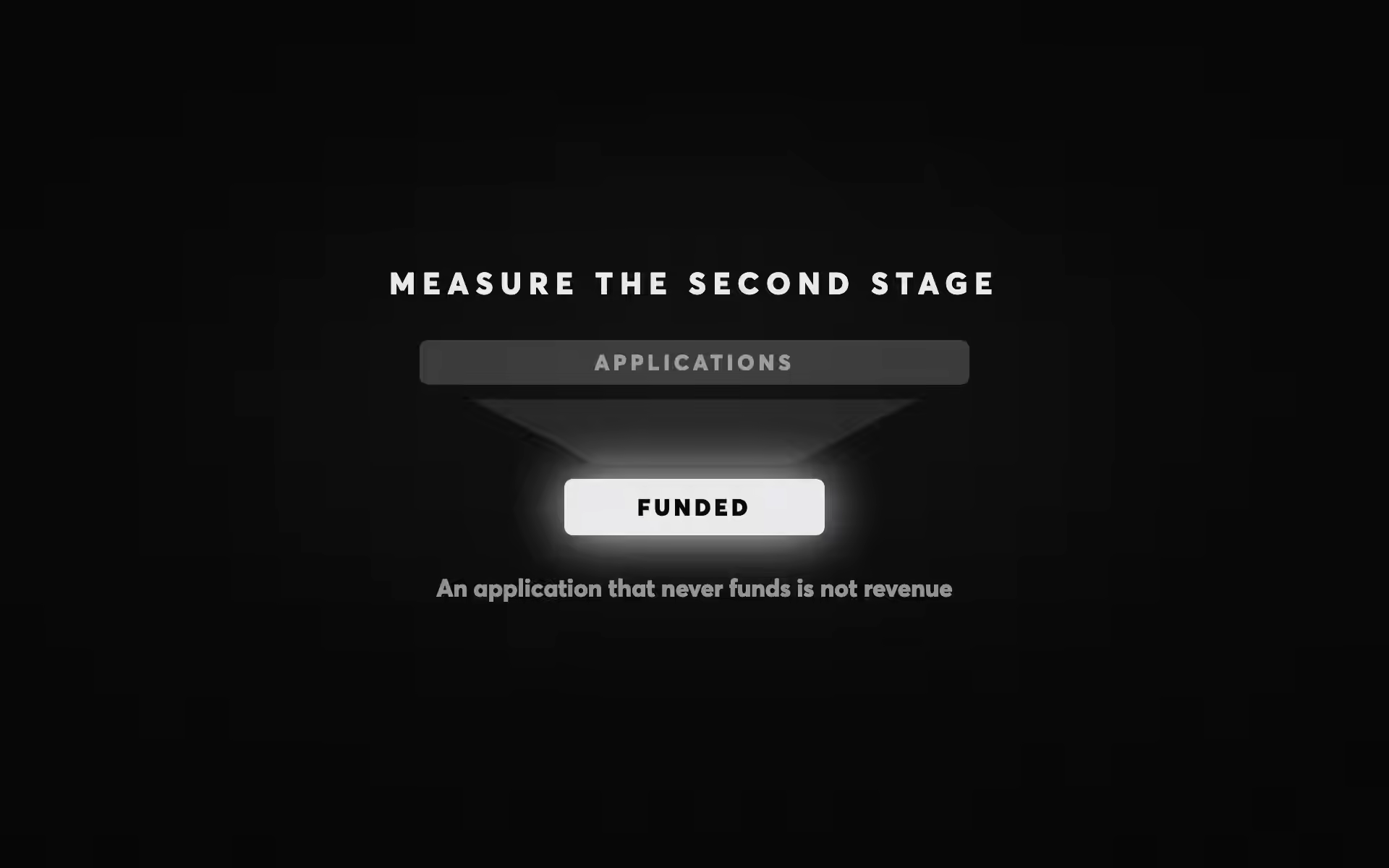
Of that 63%, a shade over two-thirds produced no enquiries at all. In monthly terms: roughly $1,500 a month buying clicks from people who wanted something else entirely.
Meanwhile the terms an actual buyer types — the category description of what the software does — took 19% of the budget and produced one and a half enquiries in three months. The best of those terms were not even running: they sat paused, and three of the strongest had been added as negative keywords on the one live campaign that could have used them.
Why this happens: two teams, two scoreboards
This is not incompetence. It is structural.
The paid search team's job was to defend the brand. Product names look like brand. So they bid on product names. Every month the report showed brand traffic up and cost per conversion down, because brand terms are cheap and convert well — so the answer was always more brand. Over twelve months, brand spend rose 63% while non-brand spend fell 17%.
The SEO team, separately, could see that the company ranked first for every one of its own names. They also knew the category results were owned by software review directories, and that outranking those would be a nine-to-twelve month job.
Both were right. Neither had the other's information.
Put the two together and the answer is obvious within an hour:
- Brand is already won organically. Bid a little, cap it hard, keep an eye on it.
- Bare generic words are not brand at all. Stop.
- Category cannot be won organically in the near term. That is exactly what the paid budget is for.
That is the whole strategy. It takes one team with both sets of numbers on one screen. It takes two teams roughly forever, because neither of them is looking at the thing that decides the answer.
When bidding on your own brand is right
None of this is an argument for switching brand campaigns off. There are four situations where paying for a search you already rank first for is the correct decision:
- Competitors are bidding on your name. If a rival's ad sits above your organic result, the click you decline is a click they get. A capped brand campaign is cheap insurance.
- Review directories outrank you for your own name. Common in software and professional services. The ad is how you get above a comparison page that monetises your traffic.
- You need to control the message. An organic result gives you a title and a description. An ad gives you sitelinks, a current offer and a landing page you chose — useful during a launch, a rebrand or a pricing change.
- Your brand search volume is itself the campaign's outcome. If upper-funnel work is doing its job, brand searches rise. Capturing them cleanly is how that work gets measured.
What none of those justify is spending two-thirds of a budget on words that merely appear in your product names. The test is not "is it our word" — it is "does the search result agree".
Product naming is a media decision
The most useful thing in this whole teardown is preventative, and it costs nothing.
Before you name a product, search the name. If page one is already full of mattresses, casinos and snails, you have chosen a name whose search results you will never control — and you have committed every future marketing budget to renting it.
Naming is usually decided by product and brand teams on meaning, memorability and trademark availability. The search result is rarely in the room. It should be: a distinctive coined name costs the same to invent as a generic one, and is free to own forever. A generic one is a permanent line item.
If you are already stuck with a generic name — most companies are, on at least one product — the qualified form is the workaround. Always pair it with the company name, in ads and in page titles, and let the pairing do the disambiguating that the bare word cannot.
Run this on your own account
Four checks, about an hour:
- Sort your brand keywords by cost per click. Anything materially more expensive than your cheapest brand term is not functioning as a brand term. Ask why.
- Google every product name on its own, in an incognito window. If page one is full of things that are not you, you are not defending a brand — you are buying a word.
- Compare the bare version against the qualified version. Product name alone versus product name plus company name. If you do not have both running, add the qualified one. If you do, the answer is already in your account.
- Add up what percentage of spend goes on your own names. Above about 40–50%, you have a reporting problem as well as a media problem — your numbers look good because brand always looks good, not because anything is working.
The line worth remembering
Organic owns what you are called. Paid buys what you do.
Get that the wrong way round and you will spend two-thirds of your budget renting words you will never own, while the terms your actual buyers type sit paused.
The match-type half of the same problem — why the cheaper click usually costs more — is covered in broad match is the most expensive cheap traffic you can buy.
Questions